Actualités dropshipping 2026 : tendances et nouveautés
Les dernières actualités du dropshipping pour 2026 : outils IA, mises à jour des plateformes, évolution des fournisseurs, TikTok Shop et produits en tendance. Analysées et mises à jour chaque semaine.
Le secteur du dropshipping évolue plus vite en 2026 qu’à n’importe quel moment de la dernière décennie. L’automatisation par l’IA, le paysage mouvant des fournisseurs, les innovations des plateformes e-commerce et l’émergence de nouveaux canaux marketing redessinent le fonctionnement des boutiques de dropshipping qui marchent. Que tu apprennes tout juste à te lancer dans le dropshipping ou que tu gères déjà une boutique établie, suivre ces actualités du dropshipping te donne une longueur d’avance.
Selon Grand View Research, le marché mondial du dropshipping a atteint 351 milliards de dollars en 2024 et devrait dépasser 500 milliards de dollars d’ici 2027, avec une croissance de 23,4 % de CAGR. Pour qui cherche à faire du dropshipping rentable, comprendre ces tendances n’est pas optionnel — c’est indispensable.
Voici les principales actualités et tendances qui façonnent le secteur en ce moment.
Les tendances du dropshipping 2026 en un coup d’œil
| Tendance | Niveau d’impact | Opportunité | Action requise |
|---|---|---|---|
| Automatisation des boutiques par l’IA | Élevé — transformateur | Lancements 10 fois plus rapides, coûts réduits | Adopter dès maintenant les outils de création de boutique IA |
| Croissance de TikTok Shop | Élevé — nouveau canal | Portée organique massive | Ajouter TikTok Shop comme canal de vente |
| Exigence de livraison rapide | Élevé — attente client | Meilleures conversions avec les entrepôts américains | Passer à des fournisseurs en livraison rapide |
| Essor du dropshipping digital | Moyen-élevé — en croissance | Marges de 80–95 % sur les produits digitaux | Ajouter des produits digitaux au catalogue |
| Priorité à la durabilité | Moyen — différenciateur | Prix premium sur les produits éco | Sourcer durablement, communiquer tes valeurs |
| Mutations des plateformes e-commerce | Moyen — technique | Meilleurs outils, coûts de migration réduits | Évaluer ta plateforme + son intégration IA |
| Évolutions réglementaires | Moyen — conformité | Avantage au premier arrivé pour les boutiques conformes | Revoir ton cadre légal chaque année |
Détaillons chaque tendance, données et actions concrètes à l’appui.
Tendance 1 : l’IA automatise presque tout le dropshipping
L’intelligence artificielle est passée du confort au passage obligé pour les dropshippers en 2025, et la tendance s’accélère en 2026. Selon une étude mondiale de McKinsey, 72 % des organisations utilisent désormais l’IA dans au moins une fonction de l’entreprise — contre 55 % en 2023.
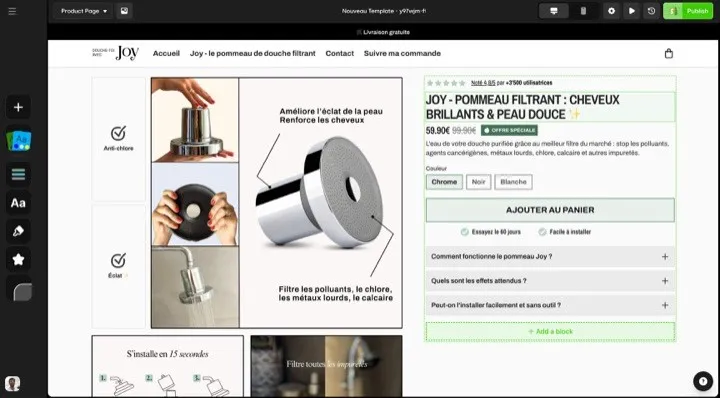
Pour les boutiques de dropshipping, les outils IA prennent maintenant en charge des tâches qui prenaient des heures :
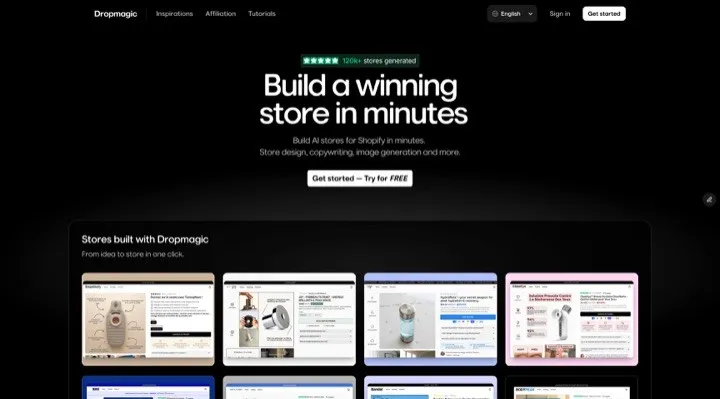
La création de boutique est le changement le plus spectaculaire. Un créateur de boutique IA comme Dropmagic peut générer une boutique Shopify complète — descriptions produits, branding, logo et mises en page comprises — à partir d’une seule URL produit. Ce qui prenait des semaines prend maintenant 15 minutes. Pour le détail complet, consulte notre guide des fonctionnalités du créateur de boutique Shopify IA.
La recherche de produits a été transformée par des outils IA qui analysent les données de ventes, les tendances des réseaux sociaux et l’activité des concurrents pour repérer les produits gagnants avant qu’ils ne deviennent viraux. Découvre comment ça marche dans notre guide sur comment l’IA trouve les produits gagnants.
Le service client est de plus en plus assuré par des chatbots IA qui répondent aux questions sur le statut des commandes, traitent les retours et résolvent les problèmes courants 24/7.
La création et l’optimisation des publicités est un autre domaine où l’IA rédige les annonces, teste des variantes et optimise le ciblage automatiquement.
Tendance 2 : TikTok Shop change la distribution en dropshipping
TikTok Shop est devenu l’un des canaux de vente qui progressent le plus vite pour les dropshippers. Selon Statista, TikTok Shop a généré environ 33 milliards de dollars de GMV mondial en 2024, avec des ventes américaines en hausse de 300 % sur un an.
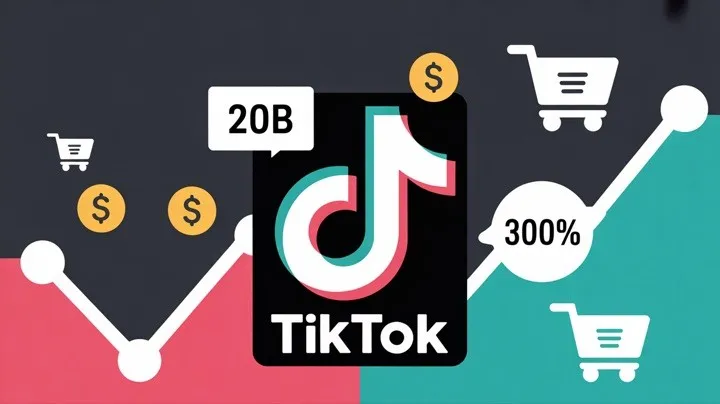
Au lieu d’amener le trafic de TikTok vers une boutique de dropshipping externe, les vendeurs peuvent désormais lister leurs produits directement sur TikTok et laisser les utilisateurs acheter sans quitter l’app. Une vidéo produit qui devient virale peut générer des milliers de ventes du jour au lendemain — et l’algorithme de TikTok n’exige pas une grosse audience pour pousser un contenu vers de nouveaux publics.
TikTok Shop a toutefois ses contraintes : concurrence féroce, marges plus fines à cause des commissions, et production de contenu permanente.
L’approche la plus maligne : utilise TikTok Shop pour la découverte et les premières ventes, puis ramène les clients récurrents vers ta propre boutique Shopify, où tu contrôles les marges et la relation client. C’est comme ça qu’on fait du dropshipping rentable sur plusieurs canaux.
Tendance 3 : la livraison rapide n’est plus optionnelle
Les attentes des clients sur les délais de livraison ont fortement augmenté. Les acheteurs en ligne américains attendent de plus en plus une livraison en quelques jours. Pour les dropshippers qui dépendent d’une livraison de 15 à 30 jours depuis la Chine, c’est un vrai tueur de conversion.
Le secteur répond avec plusieurs solutions :
Les entrepôts américains et européens sont désormais la norme chez les gros fournisseurs. Des plateformes comme CJ Dropshipping, Zendrop et Spocket proposent des entrepôts aux États-Unis avec une livraison en 3 à 5 jours.
Le sourcing domestique gagne du terrain. De plus en plus de dropshippers travaillent avec des fabricants et des grossistes basés aux États-Unis, même si les marges sont un peu plus faibles.
Les modèles hybrides se généralisent. Beaucoup de boutiques de dropshipping stockent leurs meilleures ventes localement tout en faisant du dropshipping sur leur catalogue de longue traîne depuis des fournisseurs étrangers.
Choisir la bonne plateforme e-commerce pour le dropshipping est déterminant pour intégrer la livraison rapide. Consulte notre comparatif des meilleures plateformes e-commerce pour le dropshipping pour voir lesquelles fonctionnent le mieux avec les fournisseurs à entrepôt américain.
Tendance 4 : le dropshipping digital élargit le marché
Le dropshipping traditionnel (produits physiques depuis AliExpress) n’est qu’une pièce du puzzle en 2026. Le dropshipping digital — vendre des produits numériques comme des templates, des formations, des presets ou des logiciels — progresse vite parce qu’il offre des marges de 80 à 95 % avec une livraison instantanée et zéro frais de livraison.
Les produits numériques sont une catégorie en forte croissance. Pour les dropshippers, c’est une occasion énorme d’ajouter des produits à forte marge à côté du stock physique.
Le print-on-demand (POD) est un autre modèle en expansion : tu vends des produits personnalisés (t-shirts, mugs, posters) sans stock. Des services comme Printful et Printify gèrent tout.
Les deux modèles se combinent au dropshipping traditionnel pour diversifier les revenus. Pour aller plus loin, lis notre guide sur ce qu’est le dropshipping digital et comment il fonctionne.
Tendance 5 : l’innovation des plateformes e-commerce s’accélère
Le paysage des plateformes e-commerce pour le dropshipping bouge vite. Shopify reste le leader du marché, mais plusieurs évolutions méritent d’être suivies :

Les fonctionnalités IA de Shopify (Shopify Magic, Sidekick) rendent la plateforme plus accessible aux débutants. Génération de texte, retouche d’images et assistance à la configuration de boutique sont maintenant intégrées. Vois notre comparatif Shopify Magic vs Dropmagic.
La consolidation des plateformes se poursuit. Le checkout de Shopify convertit en moyenne 15 % mieux que celui des concurrents, selon Shopify. Cet avantage en fait le choix par défaut des boutiques de dropshipping sérieuses.
L’intégration des créateurs de boutique IA est la plus grosse tendance côté plateformes. Des outils comme Dropmagic, Atlas AI et Storebuild ai s’intègrent maintenant directement à Shopify pour générer des boutiques complètes. Résultat : « comment créer une boutique Shopify » devient une question à laquelle l’IA répond en minutes, pas en semaines.
Pour un comparatif complet de tes options, vois nos 7 meilleurs outils de création de boutique IA pour Shopify.
Tendance 6 : la durabilité devient un argument de vente
Les consommateurs, surtout les plus jeunes, intègrent de plus en plus la durabilité dans leurs décisions d’achat. Les consommateurs américains sont toujours plus nombreux à dire qu’un mode de vie durable compte pour eux, et les produits présentés comme durables progressent 2,7 fois plus vite que les alternatives classiques.
Pour les boutiques de dropshipping, ça veut dire :
Les produits éco-responsables figurent parmi les catégories qui croissent le plus vite. Les objets du quotidien réutilisables, la mode durable et les soins bio surpassent régulièrement leurs alternatives classiques dans les tests de conversion.
La transparence des fournisseurs compte plus que jamais. Les clients veulent savoir d’où viennent les produits. Les boutiques qui communiquent sur leur sourcing construisent une fidélité plus forte.
Les emballages réduits, chez les fournisseurs qui proposent un packaging minimal et recyclable, sont de plus en plus appréciés des clients comme des algorithmes des marketplaces.
Tendance 7 : les évolutions réglementaires qui touchent les dropshippers
Plusieurs évolutions réglementaires impactent le secteur du dropshipping :
Les seuils de droits de douane sont dans le viseur. La règle américaine du de minimis (qui exonère de droits d’importation les colis sous 800 $) a été débattue au Congrès. Si le seuil baisse, les dropshippers qui importent depuis la Chine pourraient subir de nouveaux coûts.
Les exigences de sécurité produit sont appliquées plus strictement sur les marketplaces, et jusque sur les boutiques de dropshipping indépendantes.
L’automatisation de la taxe de vente est devenue plus simple avec des outils comme TaxJar et Shopify Tax, mais la complexité de la conformité continue d’augmenter à mesure que les États affinent leurs règles de nexus.
Rester informé de ces changements est indispensable. Revois le cadre légal de ta boutique chaque année — vois notre checklist complète pour lancer ta boutique en ligne et ses obligations légales.
Ce qui attend le dropshipping en 2026 et après
Pour la suite, ces tendances vont façonner le reste de 2026 :
La personnalisation pilotée par l’IA permettra aux boutiques de dropshipping d’afficher des produits et des mises en page différents selon le comportement de chaque visiteur.
Le commerce vocal progresse à mesure que les enceintes connectées se répandent, ce qui crée de nouvelles opportunités d’optimisation.
Le dropshipping par abonnement émerge : des boutiques proposent des box mensuelles sélectionnées dans des niches comme l’animalerie, le snacking ou les soins de la peau.
L’intégration du social commerce va s’approfondir sur Instagram Shops, TikTok Shop et YouTube Shopping.
Le secteur du dropshipping ne ralentit pas. Les entreprises qui s’en sortiront seront celles qui adoptent vite les nouveaux outils, se concentrent sur l’expérience client et traitent le dropshipping comme une vraie activité.
Prêt à te lancer ? Notre guide complet du dropshipping t’explique tout, et notre guide pour démarrer le dropshipping gratuitement te montre comment lancer sans aucun coût initial.
FAQ
Le dropshipping est-il encore rentable en 2026 ?
Oui, le dropshipping reste rentable en 2026, mais le niveau d’exigence est plus élevé qu’il y a quelques années. Selon Grand View Research, le marché croît de 23,4 % de CAGR vers 500 milliards de dollars d’ici 2027. Les boutiques qui réussissent utilisent des outils IA pour gagner en efficacité, misent sur une livraison plus rapide via des fournisseurs basés aux États-Unis et construisent de vraies marques plutôt que des boutiques de dropshipping génériques.
Quelle est la plus grande actualité du dropshipping en 2026 ?
La plus grande actualité du dropshipping, c’est l’adoption rapide des créateurs de boutique IA capables de générer des boutiques Shopify complètes en quelques minutes. Des outils comme Dropmagic remplacent des semaines de configuration manuelle par du branding, de la rédaction et du design automatisés. Ça change en profondeur la façon de se lancer dans le dropshipping — la barrière passe de milliers de dollars de freelances à un simple abonnement à un outil.
Comment démarrer le dropshipping en 2026 quand on débute ?
Pour apprendre à faire du dropshipping en 2026 : (1) choisis une niche avec Google Trends et la recherche sur TikTok ; (2) crée ta boutique avec un créateur de boutique IA comme Dropmagic ; (3) importe tes produits avec DSers ; (4) commence à faire du marketing sur TikTok et Pinterest ; (5) optimise à partir des données. Pour le pas-à-pas complet, vois comment démarrer le dropshipping gratuitement.
Quelle plateforme e-commerce est la meilleure pour le dropshipping en 2026 ?
Shopify reste la meilleure plateforme e-commerce pour le dropshipping en 2026, grâce à son écosystème d’applications (plus de 500 applications de dropshipping), ses fonctionnalités IA natives (Shopify Magic) et son checkout qui convertit 15 % mieux que la concurrence. Elle s’intègre directement aux créateurs de boutique IA comme Dropmagic et aux applications fournisseurs comme DSers. Pour un comparatif complet avec WooCommerce, BigCommerce et Wix, vois notre guide des plateformes e-commerce.
Faut-il vendre sur TikTok Shop ou sur son propre site ?
Idéalement, les deux. TikTok Shop offre une portée organique massive et un coût d’acquisition client faible, mais tu ne possèdes pas la relation client. Ta propre boutique Shopify de dropshipping te donne le contrôle total sur le branding, les prix et les données clients. Utilise TikTok Shop pour la découverte, et ta boutique pour les achats répétés et de meilleures marges.
Qu’est-ce que le dropshipping digital et faut-il s’y mettre ?
Le dropshipping digital consiste à vendre des produits numériques (templates, presets, formations, logiciels) via ta boutique de dropshipping, sans logistique physique. Les marges atteignent 80 à 95 % parce qu’il n’y a aucun coût par vente une fois le produit sourcé. Beaucoup de boutiques de dropshipping qui marchent combinent produits physiques et numériques pour maximiser leur chiffre d’affaires. Vois notre guide complet du dropshipping digital pour la stratégie détaillée.
Tu cherches une façon de créer ta boutique de dropshipping avec l’IA ? Vois notre guide complet des créateurs de boutique de dropshipping IA en 2026.