Comment écrire des descriptions de produits qui convertissent
Comment écrire des descriptions de produits qui convertissent en dropshipping : structure orientée bénéfices, le template exact à copier et comment passer à l’échelle avec le copywriting IA.
Les descriptions de produits sont le levier de conversion le plus sous-estimé d’une boutique dropshipping. Les acheteurs s’appuient massivement sur les descriptions de produits pour décider d’acheter. Pourtant, la plupart des propriétaires de boutiques dropshipping sautent complètement cette étape — ils importent leurs produits depuis AliExpress et gardent le texte d’origine du fournisseur.
C’est un double problème. Les descriptions de fournisseurs sont des fiches techniques mal traduites, bourrées de caractéristiques, qui ne persuadent personne. Et quand des centaines de boutiques dropshipping utilisent exactement le même texte, Google y voit du contenu dupliqué et fait plonger ton référencement.
Ce guide couvre la façon d’écrire des descriptions de produits qui convertissent vraiment pour une boutique dropshipping — que tu les écrives à la main ou que tu utilises un créateur de boutique IA pour les générer à grande échelle.
Pourquoi les descriptions de produits comptent plus en dropshipping
Pour des marques établies comme Nike ou Apple, les descriptions de produits sont un contenu d’appoint — les clients font déjà confiance à la marque et savent ce qu’ils achètent. Pour une boutique dropshipping, les descriptions portent une charge bien plus lourde :
-
Aucune notoriété de marque — ton texte est la seule chose qui construit la confiance
-
Des produits identiques d’une boutique à l’autre — ta description est le différenciateur
-
Dépendance au SEO — un texte unique est indispensable pour le référencement naturel
-
Des taux de retour plus élevés — une grande partie des retours arrivent parce que les articles ne correspondent pas à leur description
En dropshipping, ta description de produit n’est pas juste du texte marketing — c’est ton avantage concurrentiel. Deux boutiques dropshipping qui vendent exactement le même produit du même fournisseur obtiendront des taux de conversion radicalement différents, uniquement à cause de leurs descriptions.
L’anatomie d’une description de produit qui convertit
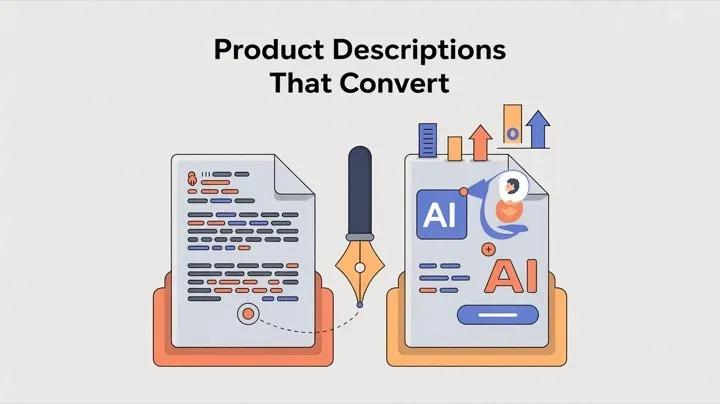
Les descriptions de produits efficaces pour une boutique dropshipping suivent une structure constante :
| Élément | Rôle | Exemple |
|---|---|---|
| Titre | Capter l’attention, communiquer la valeur | « Son qualité studio, zéro distraction » |
| Accroche d’ouverture | Nommer le problème du client | « Le bruit ambiant ruine ta concentration ? » |
| Section bénéfices | Montrer comment le produit améliore sa vie | « Fait passer ta routine matinale de 30 à 10 minutes » |
| Caractéristiques clés | Répondre aux questions pratiques | Dimensions, matériaux, compatibilité |
| Preuve sociale | Installer la confiance avec des preuves | Avis, notes, nombre d’achats |
| CTA | Déclencher l’achat | « Commande le tien aujourd’hui — livraison offerte » |
Décortiquons chaque élément.
Écris des titres qui arrêtent le scroll
Ton titre est souvent la seule chose que les acheteurs lisent. Un bon titre combine clarté, pertinence et proposition de valeur nette en 6 à 8 mots. En dropshipping, les titres doivent travailler plus dur parce que les visiteurs n’ont aucun repère de marque.
Plutôt qu’un titre bourré de caractéristiques comme « Casque Bluetooth sans fil haute qualité avec réduction de bruit », écris un titre orienté bénéfice : « Coupe le monde, concentre-toi sur l’essentiel. »
Intègre les mots-clés pertinents naturellement — ça aide autant les acheteurs que les moteurs de recherche à comprendre ce que tu vends. Mais la lisibilité passe toujours avant.
Les bénéfices avant les caractéristiques : le principe de base
C’est là que la plupart des descriptions de boutiques dropshipping échouent. Le texte du fournisseur liste des spécifications : « Acier inoxydable 304, capacité 500 ml, isolation sous vide à double paroi. » C’est un déversement de caractéristiques. Un client se moque de l’acier inoxydable 304 — ce qui l’intéresse, c’est de garder son café chaud pendant 12 heures.
Pour chaque caractéristique, demande-toi : « Et alors ? Qu’est-ce que ça apporte au client ? »
-
Caractéristique : revêtement imperméable → Bénéfice : marche sous la pluie sans t’inquiéter pour ta veste
-
Caractéristique : batterie 10 000 mAh → Bénéfice : recharge ton téléphone 3 fois sans chercher de prise
-
Caractéristique : sangles ajustables → Bénéfice : s’ajuste confortablement que tu mesures 5'2" ou 6'4"
Sois précis. « Fait gagner du temps » est vague. « Réduit le temps de préparation de 20 minutes à 5 » est convaincant.
Rends tes descriptions scannables
Les acheteurs en ligne survolent — d’après les recherches du Nielsen Norman Group, les internautes quittent souvent une page en 10 à 20 secondes. Structure tes descriptions pour la lecture en diagonale :
-
Utilise des paragraphes courts (2–3 phrases maximum)
-
Mets les bénéfices clés en avant avec des puces
-
Passe les phrases les plus importantes en gras
-
Ajoute une section caractéristiques avec dimensions, matériaux et compatibilité
-
Réponds aux questions fréquentes (taille, livraison, entretien) directement dans la description
Ce n’est pas qu’une question de lisibilité. Des descriptions claires et détaillées réduisent les retours — ce qui est critique pour une boutique dropshipping où la logistique de retour est déjà compliquée.
Utilise un langage sensoriel et émotionnel
Ce qui sépare la navigation en ligne de l’achat en boutique physique, c’est l’impossibilité de toucher, sentir et essayer le produit. Le langage sensoriel comble ce fossé.
Compare « plaid doux » et « plaid moelleux qui t’enveloppe de chaleur les soirs de froid ». La seconde version aide le client à imaginer l’expérience avant d’acheter.
Les mots à forte charge ajoutent du poids émotionnel à ton texte :
| Catégorie | Mots à forte charge |
|---|---|
| Urgence | Limité, Exclusif, Maintenant, Aujourd’hui, Instantané |
| Confiance | Garanti, Prouvé, Certifié, Reconnu |
| Qualité | Premium, Professionnel, Fait main, Élite |
| Émotion | Saisissant, Irrésistible, Captivant, Facile |
Utilise-les de façon stratégique dans les titres et les CTA — mais n’en abuse pas. L’authenticité compte plus que le battage, surtout en dropshipping où la confiance est déjà fragile.
Les descriptions de produits en dropshipping digital
Si tu explores le dropshipping digital — vendre des formations, des logiciels, des templates ou des ebooks — tes descriptions demandent une autre approche. Les produits physiques se concentrent sur les matériaux et les specs ; les produits digitaux sur la transformation et les résultats.
Pour les produits digitaux, mets en avant :
-
Ce que le client va obtenir après avoir utilisé le produit (pas ce qui est inclus)
-
La livraison instantanée — aucune attente d’expédition
-
L’accès à vie ou les conditions d’utilisation
-
Un aperçu ou une démo — captures d’écran, chapitres d’exemple, vidéos de présentation
Les descriptions en dropshipping digital fonctionnent le mieux quand elles peignent un « avant / après » : où le client en est aujourd’hui contre là où ton produit digital l’emmène. D’après Grand View Research, le marché mondial des biens numériques est en forte expansion, ce qui fait d’un bon texte produit digital un avantage concurrentiel.
Comment l’IA change l’écriture des descriptions de produits en dropshipping
Écrire des descriptions uniques et persuasives pour chaque produit est la bonne approche — mais ça ne passe pas à l’échelle. Si ta boutique dropshipping compte 50 à 200 produits, écrire chaque description à la main prend des jours ou des semaines. C’est là qu’un créateur de boutique Shopify IA change fondamentalement l’équation.
IA contre écriture manuelle : la vraie comparaison
| Critère | Généré par IA (Dropmagic) | Écriture manuelle |
|---|---|---|
| Vitesse | Des centaines de descriptions en quelques minutes | 1 à 2 heures par produit |
| Cohérence | Ton et format uniformes sur tous les produits | Varie selon l’auteur et la session |
| SEO | Mots-clés intégrés automatiquement | Nécessite une recherche de mots-clés manuelle |
| Coût | Inclus avec le créateur de boutique IA | 50–200 $ par produit (freelance) |
| Unicité | 100 % unique par produit | Unique si écrit de zéro |
| Multilingue | 40+ langues automatiquement | Nécessite des traducteurs séparés |
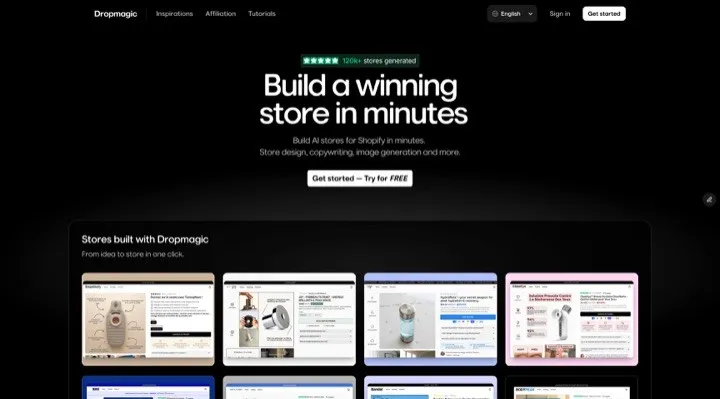
Comment Dropmagic génère les descriptions de produits
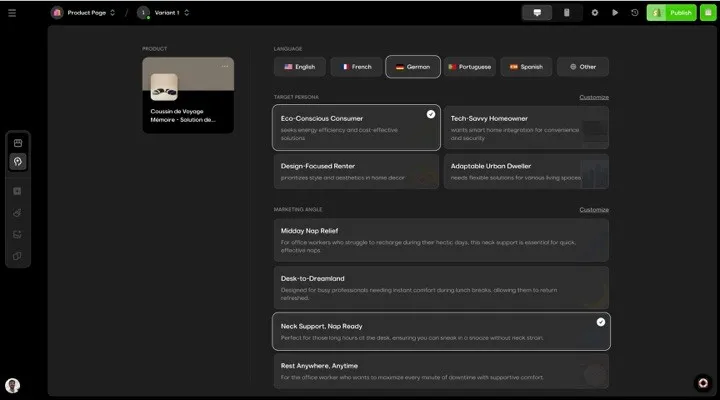
Quand tu crées une boutique Shopify avec Dropmagic, les descriptions de produits sont générées dans le cadre de la création de la boutique :
-
Colle une URL de produit depuis AliExpress, Amazon ou Alibaba
-
L’IA analyse le produit — elle extrait les images, les specs et les données de catégorie
-
Un texte orienté bénéfices est généré — pas des réécritures de fiche technique, mais des descriptions persuasives écrites à partir des schémas des marques e-commerce qui convertissent le mieux
-
L’optimisation SEO est intégrée — méta-titres, méta-descriptions et textes alternatifs sont créés automatiquement
-
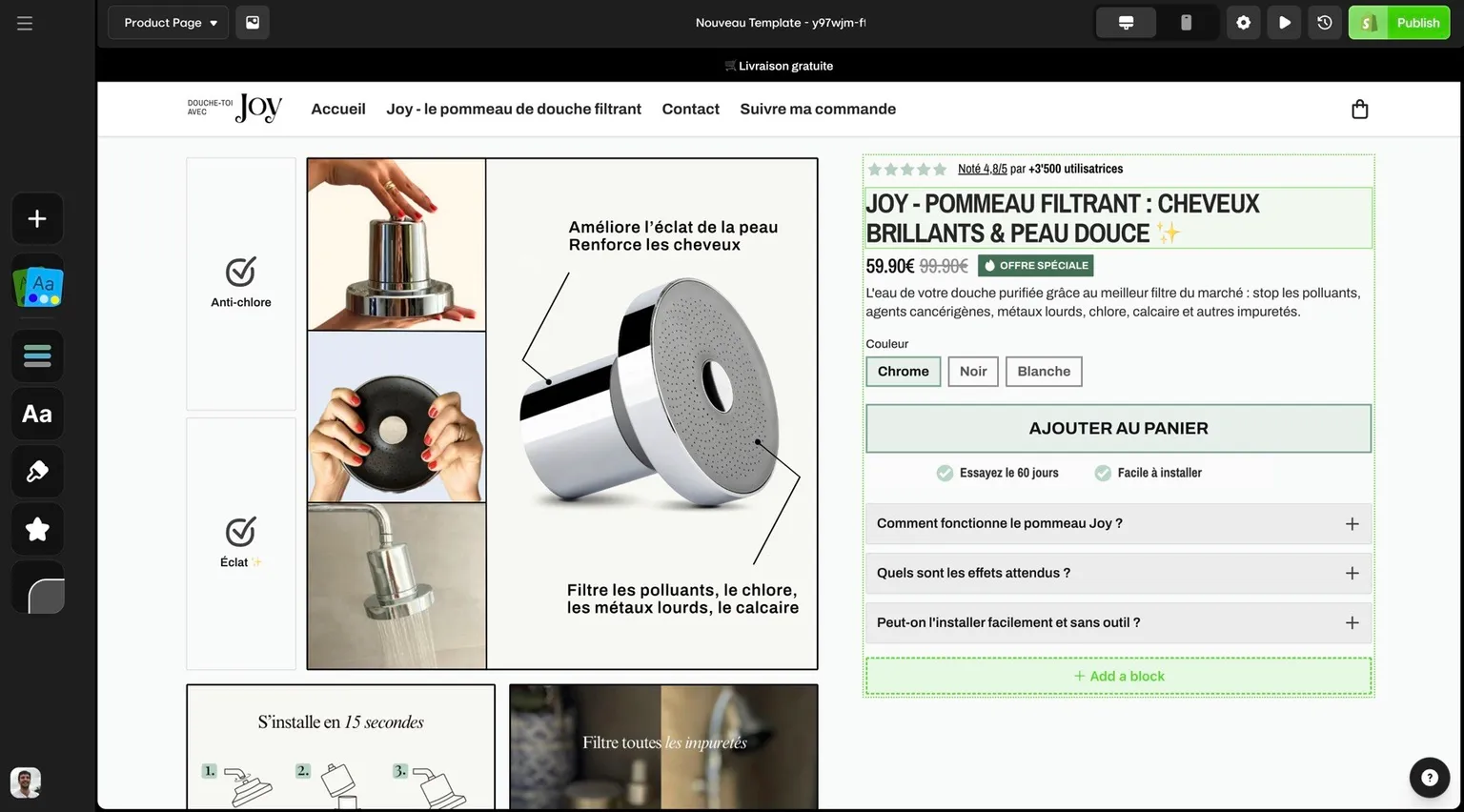
Tu personnalises ce que tu veux — modifie n’importe quelle description dans l’éditeur visuel
Le résultat : une boutique dropshipping où chaque produit a un texte unique et optimisé pour la conversion dès le premier jour — sans passer des semaines à écrire ni des milliers de dollars en copywriters.
Pour comparer la façon dont les différents outils d’IA traitent le texte produit, va voir le hub de comparaison des créateurs de boutique IA ou lis des duels comme Shopify Magic vs Dropmagic et PagePilot vs Dropmagic.
Construis la confiance avec tes descriptions
Pour une boutique dropshipping, la confiance n’est pas une option — c’est le plus gros frein à la conversion. D’après l’Edelman Trust Barometer, 81 % des consommateurs ont besoin de faire confiance à une marque avant d’acheter. Tes descriptions doivent activement installer cette confiance :
La preuve sociale dans la description : ne te contente pas d’une section avis séparée — tisse la preuve sociale dans la description elle-même. « Noté 4,8/5 par 2 300+ clients » en haut d’une description pèse plus lourd que des avis enterrés en bas de page.
Des informations de livraison transparentes : les délais de livraison en dropshipping sont généralement plus longs qu’une expédition nationale. Dis-le honnêtement dans tes descriptions : « Expédié sous 24 heures. Livraison estimée : 7 à 14 jours ouvrés. » Poser des attentes claires évite les litiges et les rétrofacturations.
Garanties et politiques : mentionne ta politique de retour et ta garantie satisfaction dans la description du produit — pas seulement dans un lien de pied de page. « Garantie satisfait ou remboursé 30 jours — sans justification » directement dans la description réduit l’hésitation à l’achat.
La précision construit la confiance. Les promesses génériques du type « matériaux de haute qualité » ne veulent rien dire. « Fabriqué en nylon Oxford 300D avec coutures renforcées aux points de tension » démontre une expertise et pose des attentes justes.
Les erreurs courantes de description de produit en dropshipping
Évite ces pièges qui tuent les taux de conversion des boutiques dropshipping :
-
Reprendre le texte du fournisseur tel quel — contenu dupliqué, zéro persuasion, SEO catastrophique
-
Déverser des caractéristiques sans bénéfices — les specs ne vendent pas ; les résultats si
-
Ignorer le formatage mobile — les murs de texte sont illisibles sur téléphone
-
Omettre les infos de livraison et de retour — ça crée une incertitude qui tue les conversions
-
Un ton générique, taille unique — ta description doit coller à ton audience cible
-
Aucune considération SEO — méta-descriptions absentes, aucune intégration de mots-clés
Pour la liste complète des erreurs de configuration, consulte notre guide des erreurs courantes de configuration de boutique et comment les corriger.
FAQ
Comment écrire des descriptions de produits pour une boutique dropshipping qui en compte des centaines ?
Écrire à la main les descriptions de plus de 100 produits n’est pas réaliste pour la plupart des propriétaires de boutiques dropshipping. L’approche la plus efficace consiste à utiliser un créateur de boutique IA comme Dropmagic, qui génère automatiquement des descriptions uniques et orientées bénéfices au moment où tu importes tes produits. L’IA crée un texte optimisé pour la conversion pour chaque produit, à partir des schémas des marques e-commerce les plus performantes. Tu peux ensuite personnaliser n’importe quelle description dans l’éditeur visuel pour y mettre ta touche.
Faut-il réécrire les descriptions du fournisseur ou partir de zéro ?
Pars toujours de zéro. Les descriptions de fournisseurs sont écrites pour des acheteurs en gros, pas pour des consommateurs finaux — elles se concentrent sur les specs et les caractéristiques plutôt que sur les bénéfices. Elles sont aussi utilisées par des centaines d’autres boutiques dropshipping, ce qui crée du contenu dupliqué que Google pénalise. Écris de nouvelles descriptions qui parlent directement aux besoins de ton client cible, ou utilise un texte généré par IA, unique à ta boutique.
Quelle longueur pour une description de produit en dropshipping ?
Il n’y a pas de réponse universelle, mais 150 à 300 mots par produit est une bonne base pour une boutique dropshipping. Les articles complexes ou à panier élevé peuvent demander plus de détail (400 à 500 mots), tandis que de simples accessoires peuvent tenir en 100 à 150 mots. L’essentiel est d’en dire assez pour répondre aux questions fréquentes et lever les objections — sans remplir avec du contenu creux.
Les descriptions générées par IA nuisent-elles au SEO ?
Non — tant qu’elles sont uniques et de bonne qualité. Google ne pénalise pas le contenu généré par IA ; il pénalise le contenu pauvre, dupliqué ou inutile. Un créateur de boutique Shopify IA comme Dropmagic génère des descriptions 100 % uniques pour chaque produit, avec les fondamentaux SEO intégrés (balises méta, textes alternatifs, intégration de mots-clés). C’est nettement meilleur pour le SEO que l’alternative choisie par la plupart des dropshippers : du texte de fournisseur copié-collé et partagé par des centaines de boutiques dropshipping.
En quoi les descriptions de produits diffèrent-elles en dropshipping digital ?
Les descriptions en dropshipping digital se concentrent sur la transformation et les résultats plutôt que sur les spécifications physiques. Au lieu de décrire des matériaux et des dimensions, tu mets en avant ce que le client va obtenir, l’avantage de la livraison instantanée et la valeur de l’accès à vie. Le cadre « avant / après » fonctionne particulièrement bien — montre où le client en est et où ton produit digital l’emmène. Pour en savoir plus sur ce modèle, consulte notre guide du dropshipping digital.
Puis-je créer une boutique Shopify avec des descriptions générées par IA et quand même bien me positionner sur Google ?
Absolument. Quand tu crées une boutique Shopify avec un créateur de boutique IA comme Dropmagic, chaque description de produit est 100 % unique, optimisée pour les mots-clés et structurée à la fois pour les acheteurs et les moteurs de recherche. D’après les recommandations de Google, c’est la qualité et l’utilité du contenu qui comptent — pas le fait qu’il ait été écrit par un humain ou une IA. Des descriptions générées par IA précises, orientées bénéfices et uniques battront à chaque fois du texte de fournisseur copié-collé.
Tu cherches une façon de créer ta boutique dropshipping avec l’IA ? Consulte notre guide complet des créateurs de boutique dropshipping IA en 2026.