Dropshipping vous permet de vendre des produits en ligne sans avoir de stock. Un client passe commande dans votre boutique, votre fournisseur expédie directement chez lui, et vous conservez la marge bénéficiaire. Pas d'entrepôt, pas de stock initial, pas de logistique d'expédition.
En 2026, l'IA change tout dans le fonctionnement du dropshipping. Au lieu de passer des semaines à construire une boutique, rédiger des descriptions de produits et créer des visuels, les outils d'IA gèrent désormais l'ensemble du processus — de l'importation de produits à la génération de boutique de marque — en moins de 30 minutes.
Ce guide couvre chaque étape pour démarrer une entreprise de dropshipping à partir de zéro, en mettant l'accent sur la façon dont l'IA élimine les plus grands obstacles à l'entrée. Si vous vous demandez comment faire du dropshipping de manière rentable, comment faire du dropshipping de la bonne manière, ou comment utiliser un générateur de boutique Shopify AI pour éviter des semaines de travail manuel — ce guide est le seul dont vous avez besoin.
TL;DR : Choisissez un produit, importez-le en un clic, laissez l'AI construire votre boutique Shopify de marque complète (texte, images, design), connectez un fournisseur comme DSers ou CJDropshipping, et lancez-vous. Coût total de démarrage : 0 $ initial. Temps total avec l'IA : moins de 30 minutes.
Qu'est-ce que le dropshipping et comment ça fonctionne ?
Le dropshipping est un modèle de gestion des stocks où vous ne touchez jamais aux produits que vous vendez. Voici comment cela fonctionne :
Vous listez des produits dans votre boutique en ligne avec une majoration
Un client passe une commande et paie votre prix de détail
Vous transmettez la commande à votre fournisseur (automatiquement, avec des outils comme DSers)
Le fournisseur expédie directement à votre client
Vous conservez la différence entre votre prix de détail et le prix de gros du fournisseur
Selon Statista, le marché mondial du dropshipping a atteint 351 milliards de dollars en 2024 et devrait dépasser les 500 milliards de dollars d'ici 2027, avec un taux de croissance annuel composé de 23,4 %. Le modèle attire les entrepreneurs car il élimine les deux plus grands obstacles de l'e-commerce : l'investissement initial en stock et les coûts d'entreposage.
Contrairement au commerce de détail traditionnel où vous achetez 500 unités en espérant les vendre, le dropshipping vous permet de tester des produits sans risque financier. Si un produit ne se vend pas, vous le retirez simplement de votre boutique. S'il décolle, vous pouvez augmenter votre échelle sans vous soucier des niveaux de stock — votre fournisseur s'occupe de la réalisation.
Termes clés du dropshipping que vous devez connaître :
Fournisseur — le fabricant ou le grossiste qui stocke et expédie les produits (AliExpress, CJDropshipping, Zendrop)
Réalisation — le processus d'emballage et d'expédition des commandes aux clients
AOV (Valeur moyenne des commandes) — le montant moyen dépensé par un client par transaction
Taux de conversion — le pourcentage de visiteurs de la boutique qui effectuent un achat (moyenne du secteur : 1,5-3 %)
Marge produit — la différence entre votre prix de vente et le coût du fournisseur (typiquement 20-50 %)
Le dropshipping est-il toujours rentable en 2026 ?
Oui — mais le jeu a changé. Les dropshippers qui réussissent en 2026 partagent trois traits : ils bougent vite, ils construisent des boutiques de marque (et non génériques), et ils utilisent l'IA pour surpasser les concurrents qui font tout manuellement.
Voici ce que montrent les données :
Le marché mondial du commerce électronique dépassera 7,4 trillions de dollars en 2025, selon Shopify. Le dropshipping capte une part croissante de cela.
Les marges bénéficiaires moyennes pour le dropshipping varient de 15 à 45 %, selon le créneau et la sélection de produits. Les articles à coût élevé et les boutiques de marque commandent les marges les plus élevées.
Les boutiques construites avec des textes et des designs générés par l'IA rapportent des temps de lancement 2 à 3 fois plus rapides comparés aux constructions manuelles, ce qui signifie que vous testez plus de produits en moins de temps — le plus grand avantage dans le dropshipping.
Le plus grand changement en 2026 est que la qualité de la boutique compte plus que jamais. Les consommateurs sont plus sophistiqués. Une boutique à l'apparence générique avec des photos de fournisseurs et des descriptions en mauvais anglais ne convertira pas. L'IA résout cela en générant une image de marque professionnelle, des textes ciblés sur les personas, et des visuels de produits uniques qui font ressembler votre boutique à une marque établie — pas à un site de dropshipping assemblé à la va-vite.
Étape 1 : Trouver un créneau rentable
Chaque entreprise de dropshipping réussie commence par un créneau — un segment de marché spécifique que vous servez. Vendre « tout à tout le monde » ne fonctionne pas. Vendre des accessoires pour animaux de compagnie haut de gamme aux propriétaires de chiens urbains, oui.
Comment valider un créneau :
Google Trends — recherchez votre mot clé de niche et vérifiez si l'intérêt est stable ou en croissance sur 12 mois. Évitez tout ce qui est en forte baisse.
Catalogues de fournisseurs — parcourez les sections tendances d'AliExpress pour repérer les catégories de produits avec un grand nombre de commandes et des avis positifs.
Signaux des réseaux sociaux — vérifiez TikTok, Instagram Reels et Pinterest pour les produits qui reçoivent un engagement organique. Les produits viraux indiquent souvent des créneaux inexplorés.
Vérification de la concurrence — un peu de concurrence est bon (valide la demande). Pas de concurrence signifie généralement pas de demande.
Les créneaux qui performent bien en 2026 : organisation de la maison, technologie pour animaux de compagnie, appareils de bien-être portables, produits de cuisine écologiques, accessoires pour la maison intelligente, et cadeaux personnalisés. Ceux-ci combinent une grande valeur perçue avec des coûts raisonnables de fournisseurs — la formule pour de solides marges.
L'insight clé : choisissez un créneau où vous pouvez raconter une histoire. Les outils de rédaction IA fonctionnent mieux lorsqu'il y a un public clair et un bénéfice clair. "Pistolet de massage portable pour les employés de bureau" donne à l'IA une persona et un angle avec lesquels travailler. "Gadgets aléatoires" non.
Étape 2 : S'approvisionner en premier produit
Une fois que vous avez un créneau, vous avez besoin d'un produit spécifique autour duquel construire votre boutique. La meilleure approche : trouvez un produit héros, construisez votre marque complète autour de lui, puis élargissez votre catalogue après avoir validé la demande.
Où s'approvisionner en produits :
AliExpress — le plus grand marché de dropshipping. Filtrez par commandes, avis et expédition ePacket. Recherchez des produits avec 4,5+ étoiles et 1 000+ commandes.
CJDropshipping — délais de livraison plus rapides qu'AliExpress (entrepôts US/EU), meilleur pour l'échelle. Offre des photographies de produits et des emballages personnalisés.
Zendrop — réalisation automatisée avec facturation de marque. Temps moyen de livraison : 5-8 jours aux États-Unis.
Ce qui fait un produit gagnant :
Résout un problème clair ou satisfait un désir fort
Se vend entre 25 et 75 $ au détail (le point idéal pour les achats impulsifs avec des marges saines)
Léger et petit (coûts d'expédition réduits)
Pas largement disponible dans les magasins de détail locaux
Possède un « facteur waouh » qui fonctionne dans les publicités vidéos courtes
Recherche de produits assistée par l'IA : Les outils modernes d'IA analysent les catalogues de fournisseurs, les tendances des réseaux sociaux et les boutiques concurrentes pour identifier des produits avec un potentiel de conversion élevé. Au lieu de faire défiler manuellement des milliers de listes d'AliExpress, l'IA présente des produits basés sur le potentiel de marge, la fiabilité de l'expédition et les signaux de demande du marché.
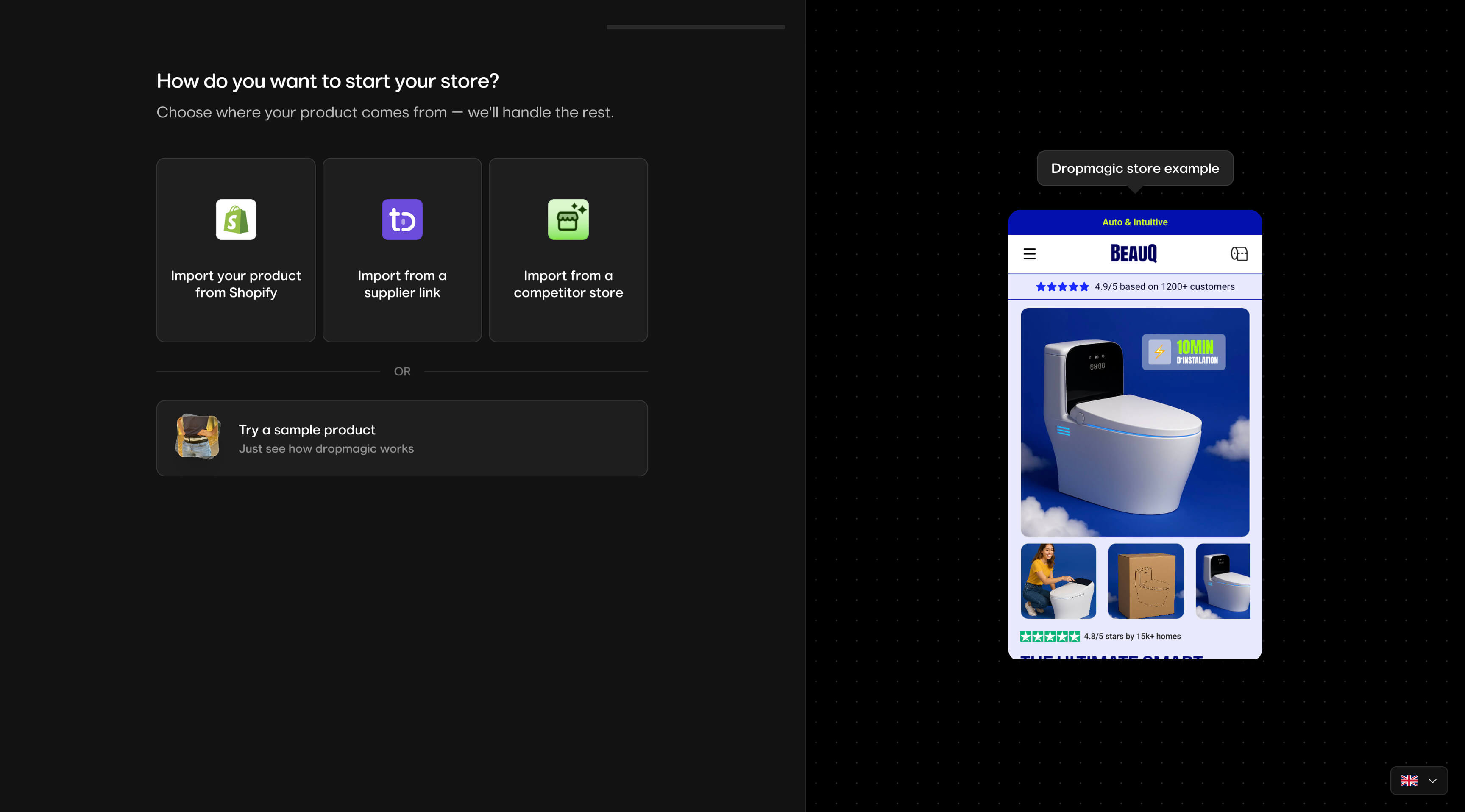
La capture d'écran ci-dessus montre comment l'IA vous permet d'importer un produit à partir de plusieurs sources — votre boutique Shopify existante, un lien fournisseur (AliExpress, Amazon, Alibaba), ou même la boutique d'un concurrent. Collez une URL et l'IA s'occupe du reste : extraction des données produit, images, prix et descriptions.
Étape 3 : Choisissez votre plateforme de commerce électronique
Le choix de votre plateforme détermine les capacités de votre boutique, sa scalabilité et son potentiel à long terme. Pour le dropshipping en 2026, trois plateformes dominent :
Shopify — la norme de l'industrie pour le dropshipping. 4,8 millions de boutiques actives dans le monde, plus de 8 000 applications couvrant tout, de l'automatisation de la réalisation au marketing par e-mail. Chaque outil majeur de dropshipping (DSers, CJDropshipping, Zendrop) est conçu d'abord pour Shopify. Les prix commencent à 39 $/mois après un essai gratuit.
WooCommerce — open-source, fonctionne sur WordPress. Plus personnalisable mais nécessite des connaissances techniques. Bon pour les développeurs expérimentés, moins idéal pour les débutants qui veulent aller vite.
Wix — constructeur facile en glisser-déposer mais beaucoup moins d'intégrations de commerce électronique. Écosystème d'applications de dropshipping limité par rapport à Shopify. Fonctionne pour les boutiques simples mais plus difficile à l'échelle.
Pourquoi la plupart des dropshippers choisissent Shopify : L'écosystème d'applications est le facteur décisif. Lorsque vous avez besoin d'automatiser la réalisation des commandes, d'envoyer des e-mails de paniers abandonnés, d'ajouter des ventes incitatives, de tester des pages de destination, ou de gérer les prix multidevises — Shopify possède des applications matures, testées au combat pour chaque scénario. Sur d'autres plateformes, vous êtes souvent en train de créer des solutions de contournement.
Pour une comparaison détaillée des plateformes avec des décompositions des prix, lisez notre guide du meilleur plateforme de commerce électronique pour dropshipping.
Étape 4 : Construisez votre boutique avec l'IA
C'est ici que le dropshipping en 2026 diffère fondamentalement de tout ce qui précède. Traditionnellement, construire une boutique de dropshipping signifiait :
Choisir un thème Shopify (0-350 $)
Personnaliser les couleurs, les polices et la mise en page (2-5 heures)
Rédiger le texte d'accueil, les descriptions de produits, et la page "À propos" (3-8 heures)
Créer ou éditer des images de produits (2-4 heures)
Concevoir des éléments de conversion : badges de confiance, minuteries d'urgence, sections FAQ (1-3 heures)
Total : 10-20 heures de travail avant même de tester si votre produit se vend.
Les constructeurs de boutiques AI — parfois appelés générateurs de sites web de dropshipping — compressent l'ensemble de ce processus en un seul flux de travail. Au lieu d'embaucher un designer et un copywriter, l’IA agit en tant que votre générateur de boutique Shopify de l'IA, générant tout, de l'image de marque aux pages produits. Voici comment cela fonctionne :
Importer un produit, générer une boutique entière
Collez une URL de produit d'AliExpress, Amazon ou Alibaba. L'IA analyse le produit — ce qu'il fait, à qui il s'adresse, quels problèmes il résout — et génère une boutique de marque complète : page d'accueil, pages produits, page "À propos", page de contact, et tout le contenu de soutien.
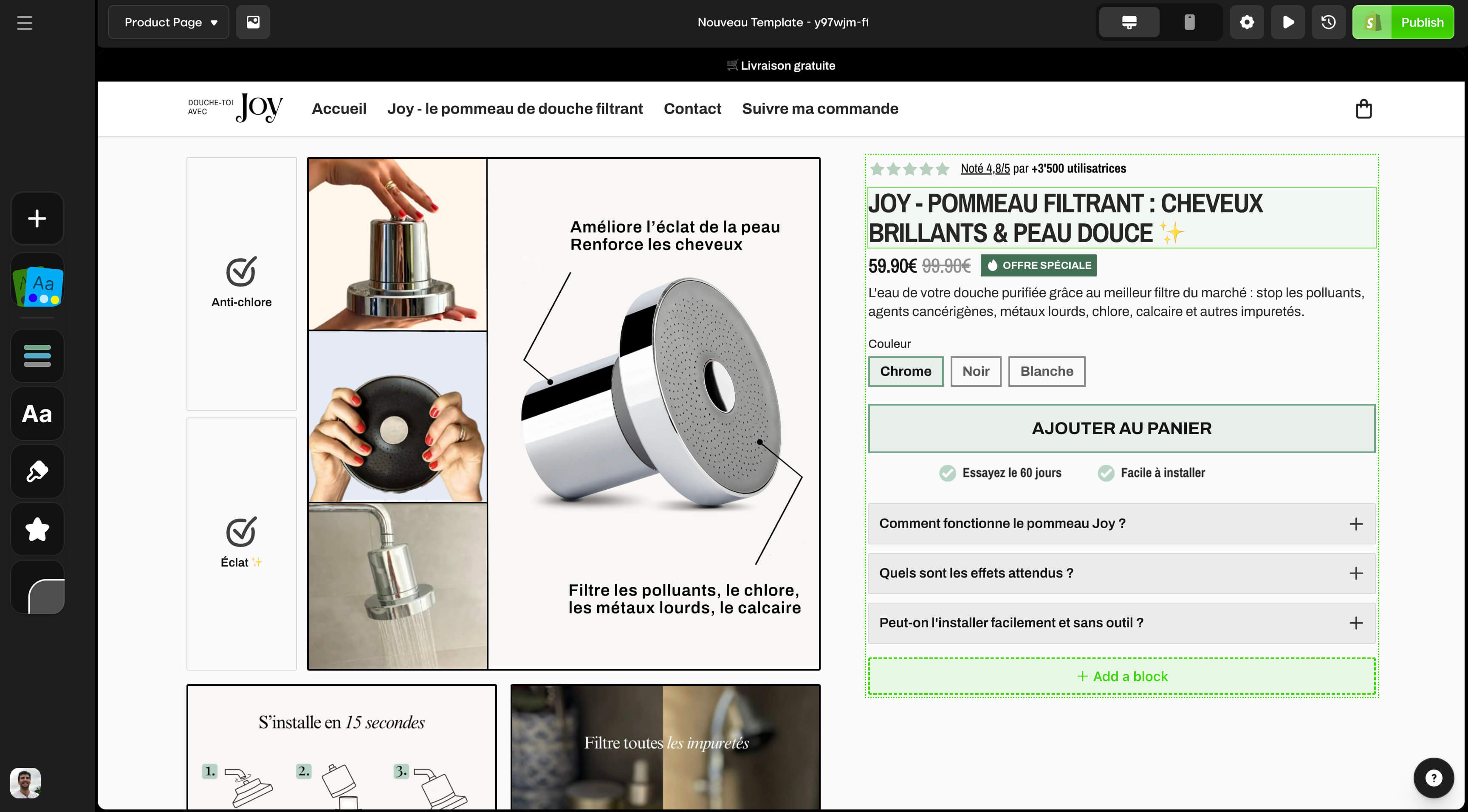
L'éditeur visuel vous permet de personnaliser chaque élément avec le glisser-déposer — sans code, sans limitations de thème. Déplacez des sections, échangez des images, modifiez le texte, changez les couleurs, et tout cela dans une interface conçue pour des pages de commerce électronique optimisées pour la conversion.
L'IA choisit votre public cible
Au lieu d'écrire des textes génériques qui ne parlent à personne, l'IA identifie des personas clients spécifiques pour votre produit et adapte chaque mot à ce public.
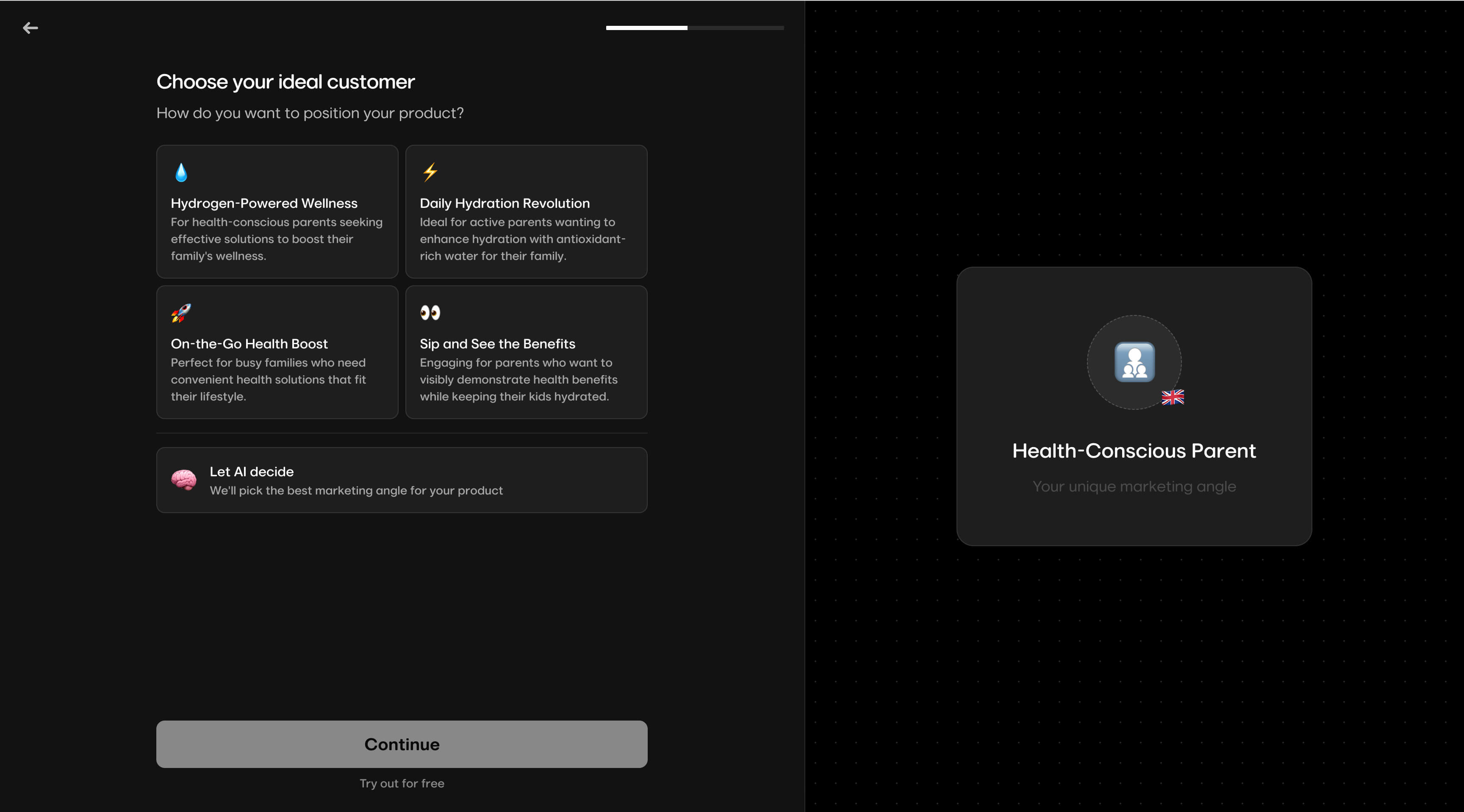
Pour un produit de filtration de l'eau, l'IA pourrait suggérer des personas comme "Parent soucieux de la santé", "Minimaliste éco-responsable", ou "Professionnel axé sur la forme physique" — chacun avec un angle marketing et un ton différents. Vous choisissez le persona qui correspond à votre marché cible, et l'IA adapte tous les textes en conséquence.
L'IA rédige des textes optimisés pour la conversion
Descriptions de produits, titres, listes d'avantages, sections FAQ, éléments de renforcement de la confiance — tous générés par l'IA avec votre persona choisi et l'angle marketing en tête.
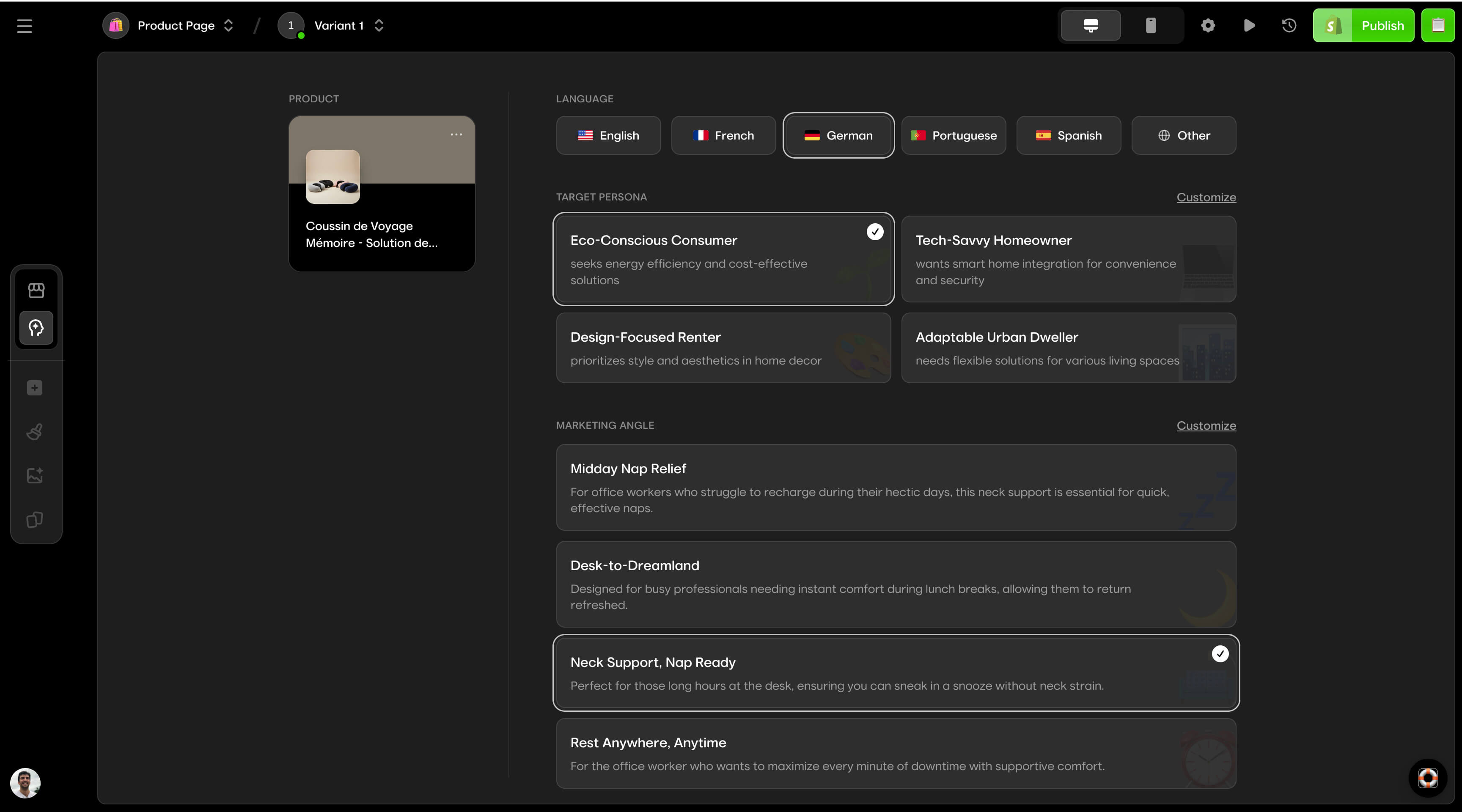
Le système de rédaction IA prend en charge plus de 40 langues avec du contenu adapté, pas seulement traduit. Cela signifie que les textes tiennent compte des nuances culturelles, des comportements d'achat locaux, et des signaux de confiance spécifiques aux marchés — essentiel pour vendre à l'international.
L'IA génère des images de produit uniques
Arrêtez de compter sur les mêmes photos de fournisseurs que chaque concurrent utilise. La génération d'images par l'IA crée des clichés de style de vie uniques, des visuels de produit en contexte, et des images de marque qui donnent à votre boutique l'air d'une marque DTC établie.
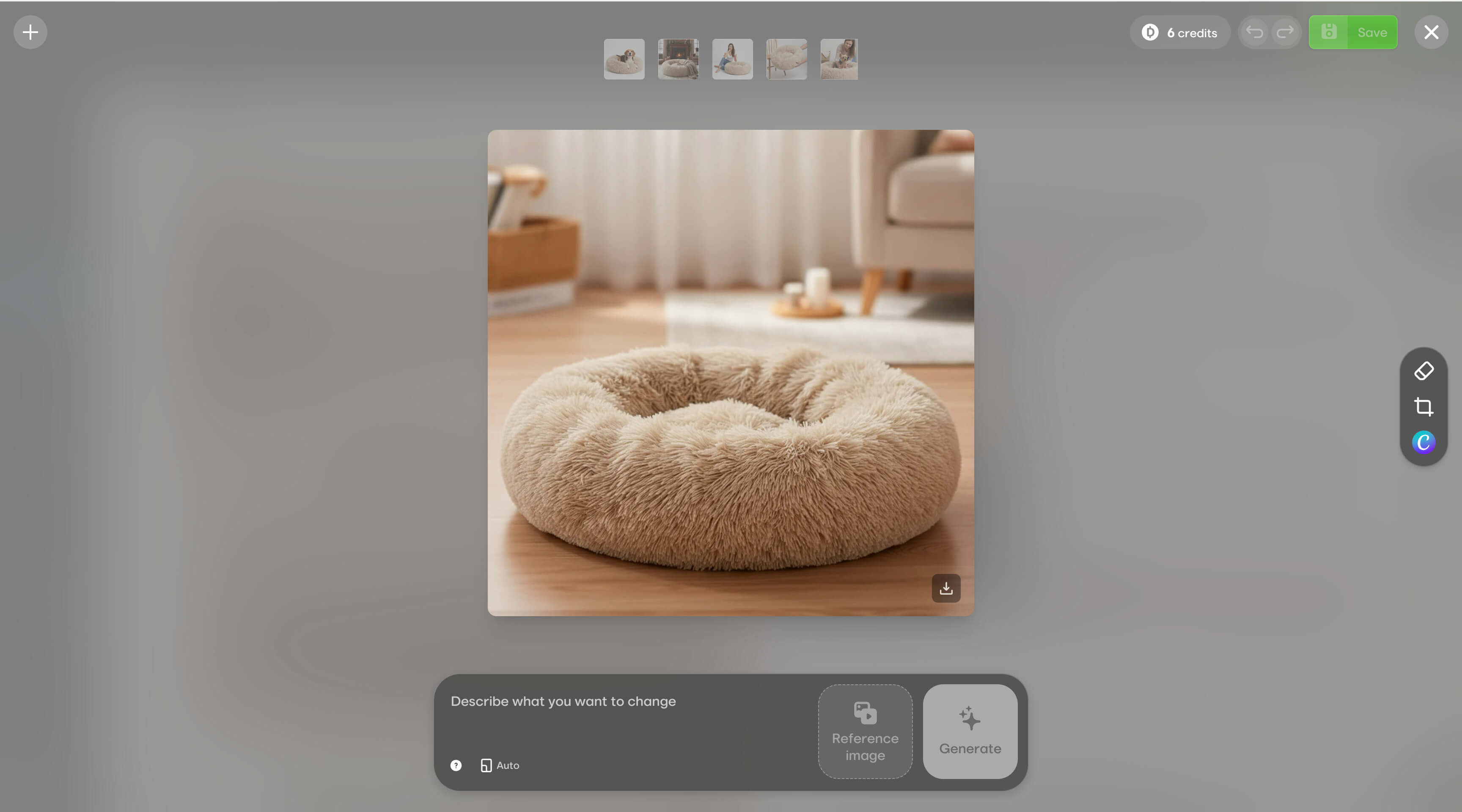
Téléchargez une image de référence ou utilisez les photos de produit de votre fournisseur, et l'IA génère des images de style de vie professionnelles — produit dans un cadre domestique, scénarios d'utilisation, gros plans — sans séance photo.
Le résultat final
Après avoir passé par le flux de travail de l'IA — importation de produit, sélection de persona, génération de textes, création d'images — vous obtenez une boutique entièrement de marque prête à être publiée.
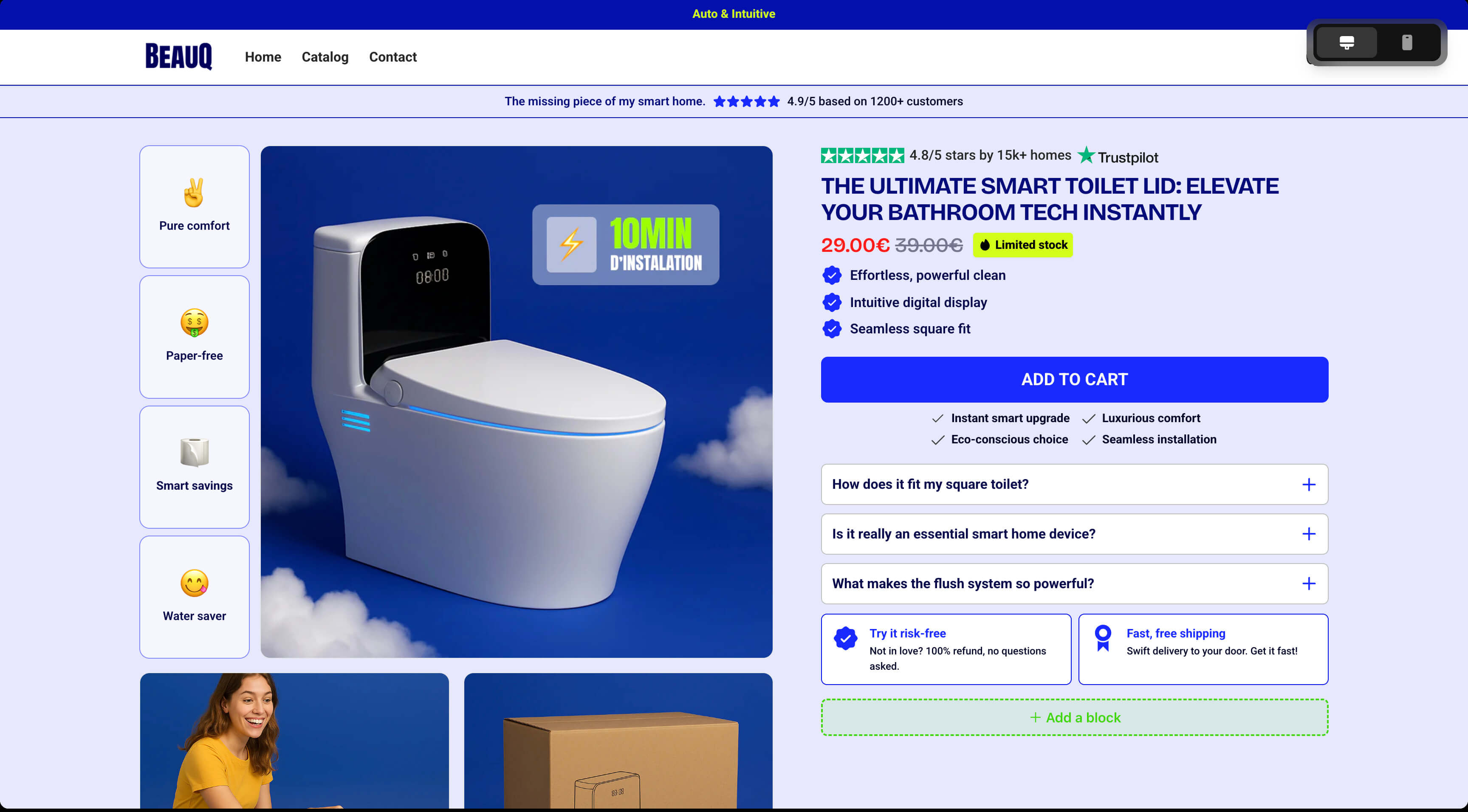
L'exemple ci-dessus montre une boutique finie avec une image de marque personnalisée, une page produit optimisée pour la conversion, des signaux de confiance (avis, garanties, infos sur l'expédition), et un design professionnel — le tout généré par l'IA à partir d'une seule URL de produit.
Pour une visite guidée pas-à-pas de tout le processus de construction, consultez notre guide sur comment construire une boutique Shopify en moins de 30 minutes.
Étape 5 : Connectez les fournisseurs et automatisez la réalisation
Votre boutique a l'air professionnelle. Vous devez maintenant la connecter à un fournisseur pour que les commandes soient réalisées automatiquement.
DSers est le choix le plus populaire — c'est le partenaire officiel de dropshipping d'AliExpress pour Shopify. Lorsqu'un client passe commande dans votre boutique, DSers effectue automatiquement la commande auprès de votre fournisseur AliExpress, transmet l'adresse de livraison du client, et synchronise les numéros de suivi vers votre boutique Shopify.
L'installation prend 10 minutes :
Installez DSers depuis le Shopify App Store
Connectez votre compte AliExpress
Mappez vos produits de boutique aux listes de fournisseurs d'AliExpress
Activez la commande automatique (ou utilisez la commande en masse en un clic)
Fournisseurs alternatifs pour une expédition plus rapide :
CJDropshipping — options d'entrepôts US/EU, livraison 5-12 jours, emballage personnalisé disponible
Zendrop — réalisation automatisée avec facturation de marque, livraison moyenne 5-8 jours aux États-Unis
Spocket — se concentre sur les fournisseurs US/EU, coût de produit plus élevé mais expédition plus rapide
La règle générale : commencez par AliExpress via DSers (coût le plus bas, plus grand catalogue), puis passez à CJDropshipping ou Zendrop une fois que vous trouvez un produit gagnant et avez besoin de délais de livraison plus rapides pour l'échelle.
Pour le guide d'installation complet, lisez notre tutoriel de dropshipping DSers.
Étape 6 : Définissez votre stratégie de tarification
La tarification détermine votre marge bénéficiaire et la valeur perçue. Si vous vous trompez, vous ne faites pas d'argent ou effrayez les clients.
La formule standard de tarification du dropshipping :
Majoration de 2-3x pour les produits à moins de 10 $ (coût fournisseur 5 $ → vendre à 12-15 $)
Majoration de 1,5-2x pour les produits de 10 à 50 $ (coût fournisseur 20 $ → vendre à 35-45 $)
Majoration de 1,3-1,8x pour les articles à coût élevé de plus de 50 $ (coût fournisseur 80 $ → vendre à 120-149 $)
Psychologie des prix qui fonctionne :
Utilisez des terminaisons en .99 ou .95 pour les produits à moins de 50 $ (29,99 $ paraît moins cher que 30 $)
Utilisez des nombres ronds pour les produits premium (149 $ semble plus premium que 148,97 $)
Affichez toujours un prix "prix de comparaison" barré — l'ancrage augmente la valeur perçue de 20 à 30 %
Offrez la livraison gratuite et intégrez le coût dans le prix de votre produit. "Livraison gratuite" convertit 15 à 20 % mieux que montrer des frais d'expédition, même lorsque le total est identique.
Ne pas courir vers le bas sur le prix. Une boutique bien de marque avec des images professionnelles, des textes ciblés sur les personas, et des signaux de confiance peut facturer 30 à 50 % de plus qu'une boutique générique vendant le produit identique. C'est exactement pourquoi l'image de marque générée par l'IA est importante — c'est la différence entre une vente à 19,99 $ et une vente à 34,99 $ sur le même produit.
Étape 7 : Lancez et obtenez votre première vente
Votre boutique est construite, les fournisseurs connectés, la tarification définie. Il est temps de générer du trafic.
Liste de contrôle avant le lancement :
Testez le flux d'achat complet (passez vous-même une commande test)
Vérifiez que toutes les pages se chargent correctement sur mobile (plus de 70 % du trafic e-commerce est mobile)
Vérifiez que les notifications par e-mail fonctionnent (confirmation de commande, mises à jour d'expédition)
Configurez une politique de confidentialité et des conditions de service de base
Installez le Pixel Facebook et le Pixel TikTok pour le reciblage
Premiers canaux de trafic (classés par vitesse jusqu'à la première vente) :
1. Annonces TikTok — le CPM le plus bas de toutes les grandes plateformes en 2026. Créez des annonces vidéo courtes montrant votre produit en action. Commencez avec un budget de 20-30 $/jour, testez 3-5 créations publicitaires, éliminez les perdants après 48 heures, éscalez les gagnants.
2. Annonces Meta (Facebook/Instagram) — plus cher que TikTok mais meilleures options de ciblage. Les campagnes d'achat Advantage+ utilisent l'IA pour optimiser la diffusion. Commencez avec 30-50 $/jour.
3. Google Shopping — capte les acheteurs à forte intention qui cherchent activement votre produit. Meilleur taux de conversion que les annonces sociales mais nécessite plus de budget pour tester.
4. Contenu organique — publiez des démonstrations de produits sur TikTok, Instagram Reels et YouTube Shorts. Coût zéro, mais prend du temps pour gagner en traction. La meilleure stratégie à long terme avec les annonces payantes.
Calendrier réaliste pour la première vente : Avec des annonces payantes et une boutique bien construite, la plupart des dropshippers obtiennent leur première vente en 3 à 7 jours. Les approches uniquement organiques prennent généralement 2 à 4 semaines. L'avantage de savoir comment commencer le dropshipping avec des outils AI est la rapidité — vous pouvez passer d'une idée de produit à une boutique en ligne le même jour, puis commencer à tester avec des annonces immédiatement.
Mise à l'échelle : De la première vente au revenu régulier
Obtenir une première vente prouve votre adéquation produit-marché. La mise à l'échelle transforme cela en une entreprise.
Quand mettre à l'échelle (signaux) :
Taux de conversion au-dessus de 1,5 % de manière cohérente
ROAS positif (Retour sur les dépenses publicitaires) au-dessus de 2x
Apparition de clients récurrents
Valeur moyenne des commandes en augmentation
Comment mettre à l'échelle :
Augmentez le budget publicitaire progressivement — augmentez les ensembles publicitaires gagnants de 20-30 % tous les 2-3 jours, pas du jour au lendemain
Ajoutez des produits — élargissez votre catalogue autour de votre produit héros (accessoires, bundles, objets complémentaires)
Améliorez l'AOV — ajoutez des ventes incitatives, des ventes croisées, et des rabais de lots. Déplacer l'AOV de 35 $ à 50 $ est souvent plus rentable que de doubler le trafic
Élargissez les marchés — c'est là que le contenu AI multilingue paie. Une boutique qui vend en anglais, français, allemand et espagnol dessert 4 fois le marché avec un travail supplémentaire minimal
Changez de fournisseur — passez d'AliExpress à CJDropshipping ou Zendrop pour une expédition plus rapide une fois que le volume le justifie
Exemples réels de boutiques de dropshipping
Voir à quoi ressemblent les boutiques réussies vous aide à comprendre ce que signifie "bon". Voici des éléments que partagent les boutiques de dropshipping à haut taux de conversion :
Design propre et de marque — couleurs cohérentes, logo professionnel, identité visuelle cohérente
Forte page produit de héros — titre axé sur les avantages, images de style de vie, preuve sociale, appel à l'action clair
Signaux de confiance partout — avis, garanties de remboursement, badges de paiement sécurisé, estimations de livraison
Éléments d'urgence — indicateurs de stock limité, minuteries de compte à rebours, bannières d'offre spéciale
Mise en page optimisée pour mobile — boutons "thumb-friendly", chargement rapide, pas de défilement horizontal
Pour des analyses détaillées de boutiques réelles avec analyse de ce qui les rend efficaces, consultez notre collection des meilleurs exemples de boutiques de dropshipping.
Comment démarrer le dropshipping gratuitement
Le budget est l'obstacle le plus courant pour les nouveaux entrepreneurs. La bonne nouvelle : vous pouvez commencer le dropshipping avec littéralement 0 $ en avance.
Construction de la boutique — Les générateurs de boutiques AI comme Dropmagic vous permettent de générer et de personnaliser votre boutique entière gratuitement. Vous ne payez que lorsque vous êtes prêt à publier.
Shopify — offre une période d'essai gratuite, vous donnant le temps de configurer et de tester avant de payer.
Approvisionnement en produits — vous n'achetez pas d'inventaire. Vous ne payez votre fournisseur qu'après qu'un client vous a déjà payé.
Marketing — le contenu organique sur TikTok et Instagram ne coûte rien. De nombreux dropshippers débutants réalisent leurs premières ventes entièrement à partir de vidéos courtes organiques.
Les seuls coûts lorsque vous lancez éventuellement : abonnement Shopify (39 $/mois) et budget publicitaire (facultatif, 20-50 $/jour recommandé). Total minimum pour lancer : moins de 40 $.
Pour une répartition plus détaillée, consultez notre guide complet pour débuter le dropshipping gratuitement en 2026.
Erreurs courantes à éviter
Après avoir analysé des milliers de boutiques, voici les schémas qui tuent les entreprises de dropshipping :
1. Tester trop peu de produits. Le dropshipping est un jeu de chiffres. Votre premier produit ne sera probablement pas un gagnant. Planifiez de tester 5 à 10 produits avant de trouver celui qui convertit de manière cohérente. L’IA accélère cela — vous pouvez créer une nouvelle boutique pour chaque test de produit en minutes, pas en jours.
2. Boutiques génériques sans image de marque. Les clients peuvent sentir une boutique de dropshipping paresseuse. Si votre boutique ressemble à un thème Shopify par défaut avec des photos d'AliExpress et des descriptions cassées, votre taux de conversion sera inférieur à 0,5 %. Investissez dans l'image de marque — ou laissez l'IA le faire.
3. Ignorer le mobile. Plus de 70 % du trafic e-commerce provient des appareils mobiles. Si votre page produit est difficile à naviguer sur un téléphone, vous perdez 7 clients potentiels sur 10.
4. Choisir le mauvais fournisseur. Un excellent produit avec un fournisseur terrible (expédition lente, articles erronés, pas de suivi) détruit votre entreprise par des rétrofacturations et des avis négatifs. Commandez toujours un échantillon avant d'aller en ligne.
5. Abandonner trop tôt. La plupart des dropshippers à succès n'ont pas réussi dès leur premier produit ou même leur cinquième. Ceux qui gagnent sont ceux qui itèrent rapidement — l’IA raccourcit considérablement ce cycle d'itération.
Questions fréquemment posées
Combien coûte le démarrage du dropshipping ?
Vous pouvez commencer gratuitement en utilisant les générateurs de boutiques AI et l'essai gratuit de Shopify. Les coûts permanents sont d'environ 39 $/mois pour Shopify plus votre budget marketing. Étant donné que vous n'achetez pas de stock au départ, la barrière à l'entrée est significativement plus basse que le commerce de détail traditionnel, où l'investissement initial en stock seul varie généralement de 2 000 à 10 000 $.
Pouvez-vous commencer le dropshipping sans argent ?
Oui. Construisez votre boutique gratuitement avec des outils AI, utilisez l'essai gratuit de Shopify pour lancer, et générez le trafic initial via le contenu organique sur TikTok et Instagram. Votre premier paiement fournisseur n'a lieu qu'après qu'un client vous ait payé. De nombreux dropshippers réussis ont commencé avec moins de 100 $ au total.
Le dropshipping est-il légal ?
Le dropshipping est légal dans pratiquement tous les pays. Vous agissez en tant que détaillant — le fait que votre fournisseur expédie directement aux clients est simplement une méthode de réalisation. Vous êtes responsable des lois de protection des consommateurs, des descriptions de produits précises et de la conformité fiscale dans votre juridiction de fonctionnement.
Combien de temps faut-il pour obtenir la première vente ?
Avec la publicité payante (TikTok ou Meta Ads) et une boutique bien optimisée, la plupart des dropshippers voient leur première vente en 3 à 7 jours. Avec seulement le marketing organique, attendez-vous à 2 à 4 semaines. La variable clé est la qualité de la boutique — une boutique professionnellement de marque avec des textes forts convertit significativement plus vite qu'un modèle générique.
Quelle est la meilleure plateforme pour le dropshipping en 2026 ?
Shopify domine l'espace dropshipping avec 4,8 millions de boutiques actives et le plus grand écosystème d'applications de dropshipping (DSers, CJDropshipping, Zendrop, et plus de 8 000 autres). Son automatisation de la réalisation, son traitement des paiements, et ses intégrations marketing en font le choix standard pour les débutants et les entreprises en expansion.
L'IA peut-elle vraiment construire une boutique de dropshipping complète ?
Oui. Les générateurs de boutiques AI créent des boutiques entièrement de marque — page d'accueil, pages produits, texte, images, et design — à partir d'une seule URL de produit. L'IA gère la rédaction basée sur les personas, la création d'identité de marque (logo, couleurs, typographie), la génération d'images de produit, et les mises en page de pages optimisées pour la conversion. Vous personnalisez tout dans un éditeur visuel et exportez vers Shopify d'un seul clic.
Qu'est-ce que le dropshipping numérique ?
Le dropshipping numérique se réfère à l'approche moderne, améliorée par l'IA, du dropshipping où la technologie automatise la plupart des travaux manuels traditionnels — recherche de produit, construction de la boutique, création de texte, génération d'image, et même production créative d'annonces. C'est l'évolution du dropshipping "manuel" au dropshipping "assisté par l'IA".
Comment trouver des produits gagnants pour le dropshipping ?
Cherchez des produits qui résolvent un problème clair, ont un "facteur waouh" pour les réseaux sociaux, se vendent dans la gamme de 25 à 75 $, et ne sont pas largement disponibles dans le commerce de détail local. Utilisez les sections tendances d'AliExpress, la découverte de produits sur TikTok, et les outils de recherche de produits assistés par l'IA qui analysent les signaux de demande, le potentiel de marge, et la fiabilité de l'expédition à travers les catalogues de fournisseurs.
Meilleures plateformes de commerce électronique pour le dropshipping en 2026 (Comparées)
Meilleures plateformes de commerce électronique pour le dropshipping en 2026 (Comparées)
7 meilleurs outils d'IA Générateur de boutique pour Shopify (2026)
7 meilleurs outils d'IA Générateur de boutique pour Shopify (2026)
Tutoriel de dropshipping avec l’IA : automatisez votre entreprise étape par étape (2026)
Tutoriel de dropshipping avec l’IA : automatisez votre entreprise étape par étape (2026)
Comment commencer à faire du dropshipping gratuitement en 2026 : Le guide complet alimenté par l'IA
Comment commencer à faire du dropshipping gratuitement en 2026 : Le guide complet alimenté par l'IA
Comment rédiger des descriptions de produits qui convertissent en 2026
Comment rédiger des descriptions de produits qui convertissent en 2026
Comment créer une boutique Shopify en moins de 30 minutes (Guide Générateur de boutique IA 2026)
Comment créer une boutique Shopify en moins de 30 minutes (Guide Générateur de boutique IA 2026)