Meilleure plateforme e-commerce pour le dropshipping 2026
La meilleure plateforme e-commerce pour le dropshipping en 2026, comparée : Shopify, WooCommerce, BigCommerce, Wix et Squarespace sur le prix, les apps et la facilité de mise en route.
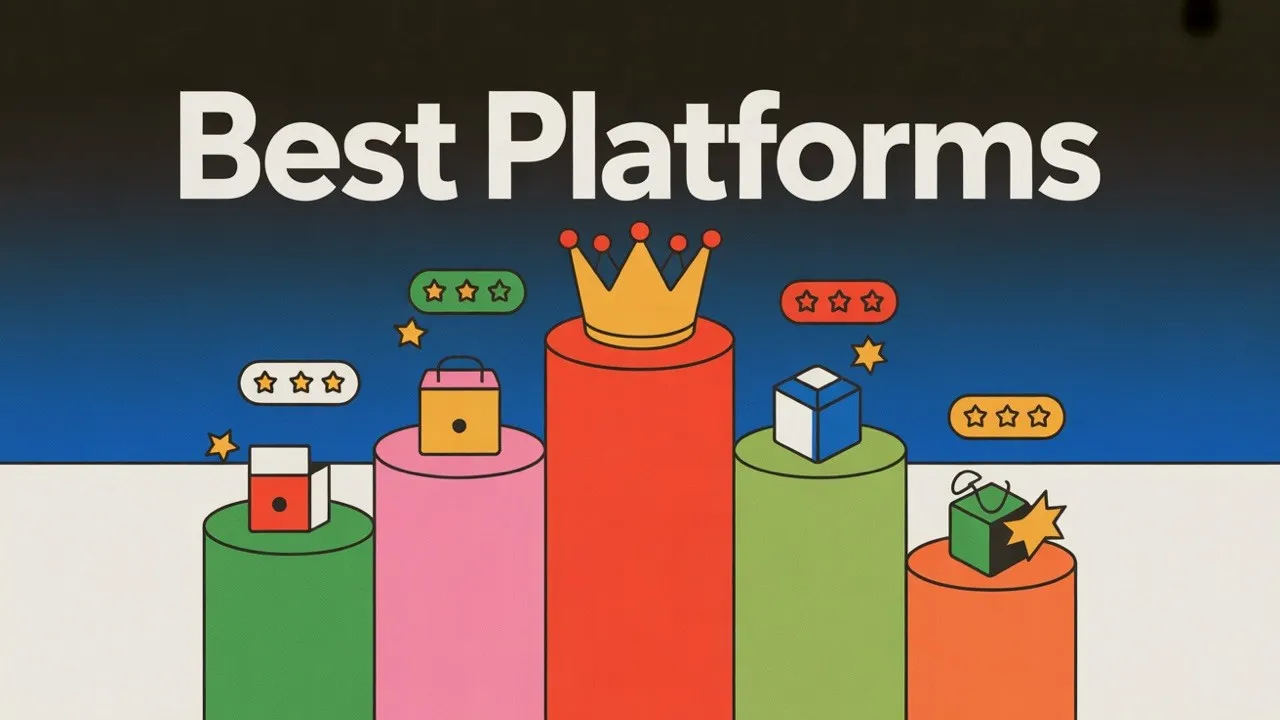
Choisir la bonne plateforme e-commerce pour le dropshipping peut faire ou défaire ton business. Le mauvais choix, c’est se battre contre des intégrations limitées, de mauvaises connexions fournisseurs et des parcours de checkout laborieux. Le bon te laisse te concentrer sur la recherche de produits et la croissance des ventes.
Nous avons testé les cinq plateformes les plus populaires pour le dropshipping en 2026 et nous les avons comparées sur le prix, les intégrations fournisseurs, le support des créateurs de boutique IA, la facilité d’utilisation et la montée en charge. Selon le suivi technologique de BuiltWith, Shopify fait tourner aujourd’hui plus de 6,9 millions de boutiques dans le monde — et sa part de marché parmi les boutiques de dropshipping continue de progresser.
Voici le verdict rapide pour quiconque apprend à faire du dropshipping :
-
Meilleur choix global : Shopify — l’écosystème d’apps le plus large, les meilleures intégrations de créateurs de boutique IA, le plus simple à faire grandir.
-
Meilleur pour les vendeurs au budget serré : WooCommerce — logiciel de base gratuit, contrôle total, plus de travail technique.
-
Meilleur pour la simplicité : Wix — éditeur glisser-déposer intuitif, fonctions de dropshipping limitées.
-
Meilleur pour les vendeurs milieu de gamme : BigCommerce — fonctionnalités natives solides, moins d’apps de dropshipping.
-
Meilleur pour le print-on-demand : Squarespace — templates superbes, intégrations de dropshipping minimales.
Comparatif rapide : les meilleures plateformes e-commerce pour le dropshipping
| Plateforme | Prix de départ | Essai gratuit | Apps de dropshipping | Support des créateurs de boutique IA | Idéal pour |
|---|---|---|---|---|---|
| Shopify | 39 $/mois (1 $/mois les 3 premiers mois) | 3 jours gratuits | Plus de 500 (DSers, CJ, Zendrop, Spocket) | Complet (Dropmagic, Shopify Magic, Atlas AI) | Meilleur choix global pour le dropshipping |
| WooCommerce | Gratuit (hébergement ~5–30 $/mois) | N/A (cœur gratuit) | Plus de 100 (AliDropship, WooDropship) | Limité | Budget serré / profils techniques |
| Wix | 17 $/mois | Plan gratuit (limité) | Plus de 30 (Modalyst, Printful, Spocket) | Wix ADI (basique) | Boutiques simples / débutants |
| BigCommerce | 39 $/mois | 15 jours gratuits | Plus de 50 (Inventory Source, Printful) | Limité | Vente multicanal |
| Squarespace | 33 $/mois | 14 jours gratuits | Plus de 10 (Printful, Printify) | Aucun | Print-on-demand / axé design |
1. Shopify — la meilleure plateforme e-commerce pour le dropshipping
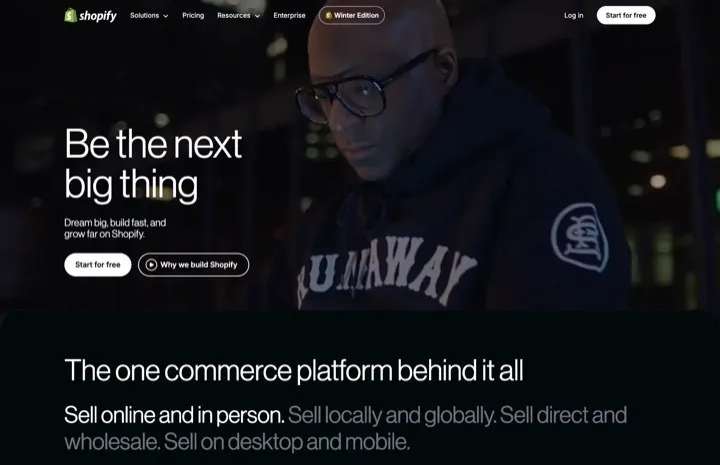
Shopify domine le terrain des plateformes e-commerce pour le dropshipping, et ce n’est pas un hasard. Selon les résultats 2025 de Shopify, la plateforme a traité 378 milliards de dollars de GMV et fait tourner des millions de boutiques de dropshipping actives dans le monde. Son écosystème d’apps est sans équivalent.
Pourquoi les dropshippers choisissent Shopify
Les intégrations fournisseurs sont le plus gros atout de Shopify. DSers (l’app de dropshipping officielle d’AliExpress), CJ Dropshipping, Zendrop, Spocket et des centaines d’autres plateformes fournisseurs proposent toutes une app Shopify native. Résultat : import de produits en un clic, préparation des commandes automatisée et synchronisation automatique du suivi.
Pour un tutoriel pas à pas, consulte notre guide sur comment faire du dropshipping sur Shopify gratuitement avec DSers.
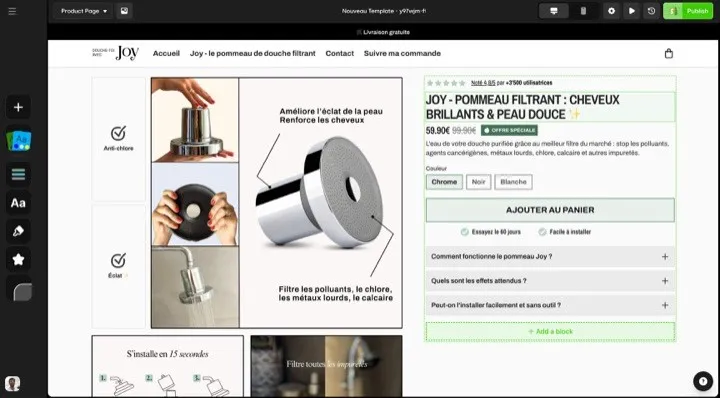
L’intégration des créateurs de boutique IA est un autre terrain où Shopify mène. Des outils comme Dropmagic te permettent de construire ta boutique Shopify à partir d’une URL produit — descriptions produits, branding et mises en page comprises — en quelques minutes. Shopify Magic ajoute une IA native pour générer du contenu, tandis qu’Atlas AI et Storebuild.ai offrent d’autres options d’automatisation. Aucune autre plateforme e-commerce pour le dropshipping n’a ce niveau de support des outils IA.
La conversion du checkout touche directement ta rentabilité. Selon Shopify, son checkout convertit en moyenne 15 % mieux que les plateformes concurrentes — et jusqu’à 36 % mieux — un avantage sérieux pour des boutiques de dropshipping où chaque point de pourcentage compte.
Les tarifs Shopify pour les dropshippers
Shopify démarre à 1 $/mois pendant les trois premiers mois (tarif promotionnel), puis 39 $/mois pour le plan Basic. Avec Shopify Payments, aucun frais de transaction supplémentaire — tu paies seulement les frais standards de carte bancaire (2,9 % + 0,30 $).
Les limites de Shopify
Le principal inconvénient, c’est le coût une fois la période promotionnelle terminée. À 39 $/mois, ce n’est pas le moins cher. Mais pour un dropshipper sérieux, le temps gagné grâce à des intégrations supérieures — surtout quand tu construis ta boutique Shopify avec des outils IA — justifie largement le prix.
2. WooCommerce — la meilleure plateforme gratuite pour les profils techniques
WooCommerce est un plugin e-commerce gratuit et open source pour WordPress. Selon BuiltWith, il fait tourner environ 23 % des boutiques en ligne dans le monde, ce qui en fait la deuxième plateforme e-commerce la plus utilisée.
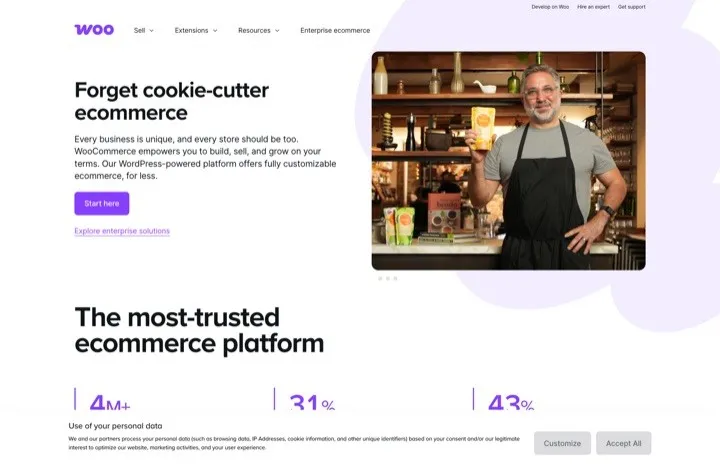
Pourquoi envisager WooCommerce pour le dropshipping
Aucun frais de plateforme. WooCommerce en lui-même est gratuit. Tu paies seulement l’hébergement (5–30 $/mois), un domaine (10–15 $/an) et les éventuels plugins premium.
Contrôle total. L’open source te laisse personnaliser chaque aspect. Tu n’es enfermé dans aucun écosystème.
Les plugins de dropshipping comme AliDropship (89 $ une seule fois) et WooDropship te permettent d’importer des produits depuis AliExpress et d’automatiser la préparation des commandes.
Les limites de WooCommerce
La complexité technique est le plus gros obstacle — tu dois gérer l’hébergement, l’installation de WordPress, les mises à jour de sécurité et la compatibilité des plugins.
Moins d’intégrations fournisseurs. Le choix est bien plus réduit que les plus de 500 apps de Shopify. Certains fournisseurs populaires ne proposent pas d’intégration WooCommerce.
Pas de support des créateurs de boutique IA. Contrairement à l’écosystème d’outils IA de Shopify, WooCommerce offre peu d’options d’automatisation IA pour construire des boutiques de dropshipping.
3. Wix — le meilleur pour les boutiques de dropshipping simples
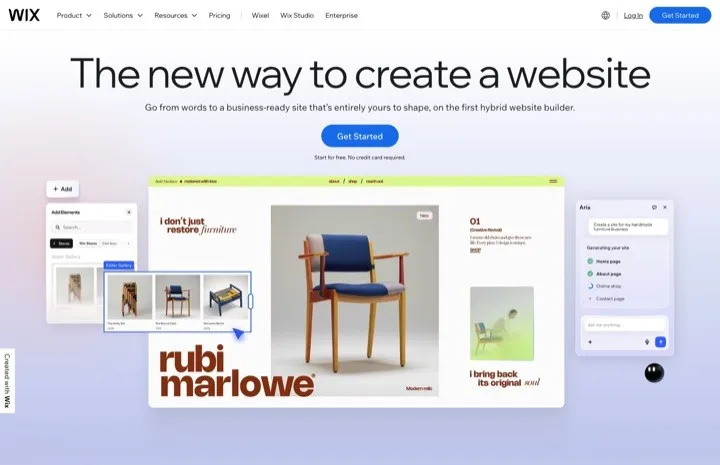
Wix est connu pour son éditeur glisser-déposer accessible aux débutants, avec des fonctions e-commerce adaptées à du dropshipping à petite échelle.
Pourquoi envisager Wix
Facilité d’utilisation. L’éditeur de Wix est vraiment le plus simple de toutes les plateformes. Si tu n’as jamais construit de site, Wix paraît intuitif tout de suite.
Des apps de dropshipping intégrées. Wix se connecte directement à Modalyst, Spocket et Printful. Modalyst donne accès à des millions de produits AliExpress.
Des plans abordables. Les plans e-commerce démarrent à 17 $/mois, sans frais de transaction.
Les limites de Wix
Montée en charge limitée. Les boutiques de dropshipping avec plus de 100 produits peuvent devenir lentes. Tu finiras probablement par être à l’étroit.
Pas de migration de plateforme. Tu ne peux pas exporter ta boutique Wix vers une autre plateforme — migrer impose de tout reconstruire de zéro.
Pas de support du dropshipping digital. La livraison de produits numériques chez Wix est basique face à l’app Digital Downloads de Shopify et aux intégrations SendOwl.
4. BigCommerce — le meilleur pour la vente multicanal
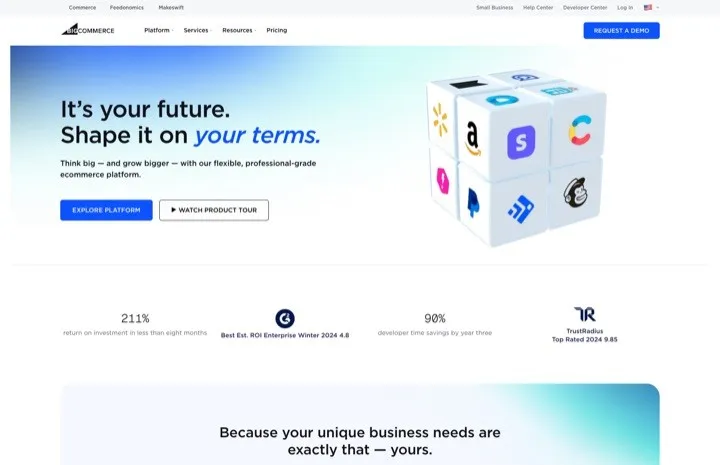
BigCommerce se positionne comme une plateforme e-commerce prête pour l’entreprise, avec des fonctionnalités natives solides.
Pourquoi envisager BigCommerce
Les fonctionnalités natives réduisent la dépendance aux apps : gestion multidevise, filtrage produit avancé et devis de livraison en temps réel sont inclus de base.
Vente multicanal. Intégration native avec Amazon, eBay, Facebook, Instagram et Google Shopping.
Aucun frais de transaction sur aucun plan, quelle que soit la passerelle de paiement.
Les limites de BigCommerce
Un écosystème de dropshipping plus petit (~50 apps contre plus de 500 chez Shopify).
Des plans plafonnés au chiffre d’affaires. Dépasser 50 K$/an sur le plan Standard oblige à passer au plan supérieur — la réussite est punie.
Aucune intégration de créateur de boutique IA comparable à l’écosystème de Shopify.
5. Squarespace — le meilleur pour les boutiques axées design
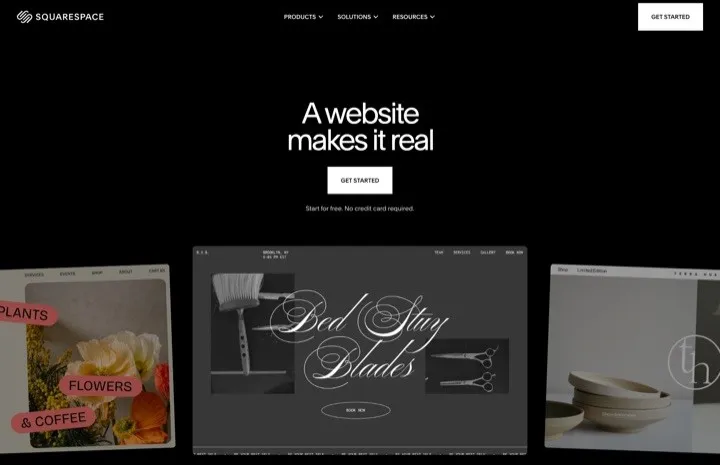
Squarespace est célèbre pour ses templates superbes, mais ses capacités de dropshipping sont limitées.
Pourquoi envisager Squarespace
Un design soigné. Les templates Squarespace comptent parmi les plus beaux de l’e-commerce. Parfait pour les entrepreneurs attachés à leur marque.
Intégration print-on-demand. Fonctionne bien avec Printful et Printify pour les produits personnalisés.
Les limites de Squarespace
Très peu d’intégrations de dropshipping (~10 extensions compatibles). Pas conçu pour les fournisseurs AliExpress ou CJ Dropshipping.
Aucun écosystème d’apps comparable à la marketplace de Shopify.
Comparatif des plateformes : le support du dropshipping digital
Pour les entrepreneurs qui explorent le dropshipping digital — vendre des templates, des formations, des presets et des logiciels — le choix de la plateforme compte encore plus :
| Plateforme | Support des produits numériques | Livraison instantanée | Produits par abonnement | Numérique + physique combinés |
|---|---|---|---|---|
| Shopify | ✅ App Digital Downloads (gratuite) | ✅ Liens de téléchargement automatiques | ✅ Via des apps (Bold, ReCharge) | ✅ Même boutique, panier mixte |
| WooCommerce | ✅ Natif | ✅ Automatique | ✅ WooCommerce Subscriptions | ✅ Même boutique |
| Wix | ✅ Basique | ✅ Téléchargement basique | ❌ Limité | ⚠️ Basique |
| BigCommerce | ✅ Natif | ✅ Automatique | ✅ Via des apps | ✅ Même boutique |
| Squarespace | ✅ Digital Products | ✅ Automatique | ✅ Espaces membres | ✅ Même boutique |
Shopify et WooCommerce sont les choix les plus solides pour combiner dropshipping numérique et physique dans une seule boutique.
Quelle plateforme choisir ?
La réponse dépend de ta situation et de la façon dont tu veux faire du dropshipping :
Choisis Shopify si tu prends le dropshipping au sérieux et que tu veux accéder au plus grand écosystème de fournisseurs, aux meilleurs créateurs de boutique IA comme Dropmagic, et à une plateforme qui suit ta croissance. C’est le bon choix pour 90 % des dropshippers.
Choisis WooCommerce si tu es technique, que tu veux un contrôle total et que gérer un hébergement et WordPress ne te fait pas peur.
Choisis Wix si tu testes un petit catalogue produit et que tu veux la mise en route la plus simple. Passe à Shopify quand tu montes en charge.
Choisis BigCommerce si tu vends déjà sur plusieurs canaux (Amazon, eBay, réseaux sociaux) et que tu veux une intégration native.
Choisis Squarespace si tu te concentres sur le print-on-demand ou le dropshipping digital, là où le design prime.
Pour la plupart des débutants qui apprennent à se lancer dans le dropshipping, Shopify associé à DSers pour la préparation des commandes et à Dropmagic pour la création de boutique par IA est la voie la plus éprouvée. Commence par notre guide comment se lancer dans le dropshipping gratuitement pour lancer ta boutique dès aujourd’hui.
FAQ
Quelle est la meilleure plateforme e-commerce pour le dropshipping en 2026 ?
Shopify est la meilleure plateforme e-commerce pour le dropshipping en 2026 grâce à ses intégrations fournisseurs (plus de 500 apps), au support des créateurs de boutique IA (Dropmagic, Shopify Magic, Atlas AI), aux taux de conversion du checkout (15 % de mieux que les concurrents selon Shopify) et à sa capacité à monter en charge. WooCommerce est la meilleure alternative gratuite pour les profils techniques. Consulte notre guide complet du dropshipping pour tout le processus de mise en place.
Comment démarrer le dropshipping sur Shopify gratuitement ?
Utilise l’essai gratuit de Shopify pour construire ta boutique, puis DSers (plan gratuit) pour importer des produits depuis AliExpress. Ajoute un créateur de boutique IA comme Dropmagic pour générer automatiquement un branding professionnel et des descriptions produits. Tu ne paies les produits qu’une fois que les clients les ont achetés. Après l’essai, Shopify propose 1 $/mois pendant les 3 premiers mois. Pour le pas-à-pas complet, consulte notre tutoriel DSers.
Est-ce que je peux changer de plateforme e-commerce plus tard ?
Oui, mais c’est plus simple avec certaines plateformes. Shopify et BigCommerce prennent en charge l’export CSV des produits. WooCommerce offre une portabilité totale des données. Wix n’autorise pas l’export d’une boutique — migrer impose de tout reconstruire de zéro. Choisis la bonne plateforme dès le départ en l’évaluant face aux besoins précis de ta boutique de dropshipping.
Ai-je besoin d’une app de dropshipping séparée, ou les plateformes l’incluent-elles ?
Aucune grande plateforme e-commerce n’intègre nativement les fonctions de dropshipping. Tu auras toujours besoin d’une app tierce (DSers, Spocket, AliDropship) pour te connecter aux fournisseurs et automatiser la préparation des commandes. Shopify propose le plus large choix de ces apps, et c’est son avantage clé pour faire du dropshipping efficacement.
Combien coûte la création d’une boutique Shopify pour le dropshipping ?
Une boutique Shopify de dropshipping basique coûte 39 $/mois après la période promotionnelle (1 $/mois pendant 3 mois), plus un domaine (~12 $/an). Avec des outils gratuits comme DSers et l’essai gratuit de Dropmagic, tu évites d’embaucher des rédacteurs (500–2 000 $) et des designers (1 000–5 000 $). Budget de départ réaliste : 50–100 $ pour le premier mois, contre plus de 5 000 $ pour une boutique construite à la main.
Quelle plateforme gère le mieux le dropshipping digital ?
Shopify et WooCommerce sont les meilleures plateformes e-commerce pour le dropshipping digital. Toutes les deux gèrent la livraison numérique instantanée, les produits par abonnement et les paniers mixtes avec des articles physiques et numériques. L’app Digital Downloads de Shopify est gratuite et s’intègre sans friction, ce qui en fait l’option la plus simple pour les vendeurs qui veulent combiner boutiques de dropshipping physiques et numériques.
Tu cherches une manière de construire ta boutique de dropshipping avec l’IA ? Consulte notre guide complet des créateurs de boutique de dropshipping par IA en 2026.