Qu’est-ce que le dropshipping digital ? Guide 2026
Le dropshipping digital expliqué : vends des produits numériques avec 80-95 % de marge, livraison instantanée et zéro stock. Produits, plateformes et vrais calculs de marge.
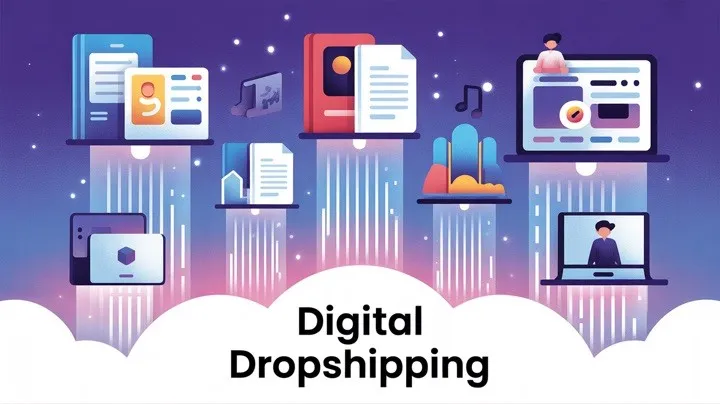
Le dropshipping digital est un modèle économique où tu vends des produits numériques en ligne sans les créer toi-même. Au lieu de biens physiques expédiés depuis un entrepôt, tu vends des fichiers téléchargeables — templates, presets, formations, imprimables, outils logiciels et plus encore — livrés instantanément aux clients par e-mail ou via un lien de téléchargement.
Pas de stock, pas de délais de livraison, pas de casse-tête de retours. Et comme il n’y a aucun coût de revient après la création initiale (ou l’achat de licence), les marges peuvent atteindre 80–95 %.
Pour les entrepreneurs qui apprennent à se lancer dans le dropshipping, les produits numériques représentent l’une des opportunités les plus rentables qui existent.
Ce guide couvre tout ce que tu dois savoir sur le dropshipping digital : comment ça marche, quoi vendre, comment faire du dropshipping avec des produits numériques, et comment ce modèle se compare aux modèles traditionnels.
Comment fonctionne le dropshipping digital
La mécanique de base ressemble à celle du dropshipping traditionnel, mais au lieu de produits physiques et de logistique d’expédition, tu manipules des fichiers numériques et de la livraison instantanée.
Voici le déroulé :
-
Tu trouves ou crées des produits numériques — templates de design, presets photo, contenus pédagogiques, illustrations imprimables ou outils logiciels.
-
Tu les mets en vente sur ta boutique en ligne avec des pages produit et des descriptions professionnelles.
-
Un client achète le produit sur ta boutique de dropshipping.
-
Le produit est livré automatiquement — via un lien de téléchargement instantané ou un e-mail contenant les instructions d’accès.
-
Tu gardes le bénéfice — comme il n’y a pas de fournisseur à payer à chaque commande (contrairement au dropshipping physique), les marges sont nettement plus élevées.
La différence clé avec le dropshipping traditionnel : une fois que tu as sourcé ou créé un produit numérique, il n’y a plus de coût unitaire. Ta centième vente coûte autant que la première — c’est-à-dire presque rien.
Dropshipping digital vs dropshipping traditionnel
Les deux modèles te permettent de gérer une activité e-commerce sans stock, mais ils diffèrent sur des points critiques. Si tu cherches la façon la plus rentable de faire du dropshipping, ces différences sont essentielles à comprendre :
| Facteur | Dropshipping digital | Dropshipping traditionnel |
|---|---|---|
| Marges bénéficiaires | 80–95 % | 15–40 % |
| Délai de livraison | Instantané (téléchargement/e-mail) | 3–30 jours (expédition) |
| Retours/remboursements | Rares (biens numériques) | Fréquents (biens physiques) |
| Coût de démarrage | Quasi nul | Quasi nul |
| Charge de support client | Faible | Moyenne à élevée |
| Scalabilité | Quasi illimitée | Limitée par la capacité du fournisseur |
| Concurrence | En croissance | Très forte |
| Effort de création produit | Modéré (une seule fois) | Aucun (les fournisseurs fournissent) |
| Idéal pour | Créateurs, solopreneurs, revenus passifs | Testeurs de produits, chasseurs de tendances, ceux qui veulent scaler |
Pour une comparaison plus large des modèles économiques, lis notre guide sur le dropshipping vs le commerce de détail traditionnel.
Quels produits numériques peux-tu vendre ?
Le marché des produits numériques est énorme et en croissance. Le marché de la formation en ligne à lui seul est énorme et continue de croître rapidement. Voici les catégories les plus rentables pour le dropshipping digital en 2026 :
Templates et ressources graphiques
C’est la plus grande catégorie du dropshipping digital. On y trouve les templates Canva (posts pour les réseaux sociaux, présentations, CV), les templates Notion (gestion de projet, suivi d’habitudes, budgets), les templates de site web, les templates d’e-mailing et les templates de documents professionnels.
Les ressources graphiques comme les packs d’icônes, les bundles de polices, les collections de photos de stock et les templates de mockups marchent aussi très bien. Beaucoup de vendeurs en achètent la licence auprès de créateurs sur des plateformes comme Creative Market ou Envato Elements, puis les revendent depuis leur propre boutique de dropshipping à leur marque.
Presets photo et vidéo
Les presets Lightroom, les actions Photoshop et les LUTs vidéo (filtres d’étalonnage) sont des produits numériques qui se vendent en continu. Les passionnés de photo et les créateurs de contenu les achètent pour obtenir un style visuel précis sans apprendre des techniques de retouche complexes.
Formations en ligne et contenus pédagogiques
Les formations sur le marketing des réseaux sociaux, la photo, le fitness, la cuisine, la finance personnelle ou la maîtrise de logiciels se vendent bien en produit numérique. Tu peux créer ton propre contenu de formation ou t’associer à des experts qui fournissent la matière pendant que tu t’occupes du marketing et de la distribution.
Produits imprimables
Les agendas imprimables, les affiches déco, les faire-part de mariage, les fiches d’activités pour enfants et les templates d’organisation sont téléchargés par des clients qui les impriment chez eux. Cette catégorie est peu concurrentielle et parle aux audiences créatives.
Outils logiciels et plugins
Les petits outils logiciels, les extensions de navigateur, les apps Shopify, les plugins WordPress et les outils de productivité peuvent se vendre en produit numérique. Cette catégorie demande des compétences techniques pour être créée, mais elle se vend au prix le plus élevé et génère les revenus récurrents les plus solides grâce aux abonnements.
Musique et audio
Les musiques libres de droits, les effets sonores, les jingles de podcast et les boucles audio sont achetés par les créateurs de contenu, les vidéastes et les entreprises pour leurs projets.
Comment lancer une boutique de dropshipping digital
Si tu découvres comment faire du dropshipping avec des produits numériques, la démarche est simple. Voici le pas à pas complet :
Étape 1 : choisis ta niche et tes produits
Choisis une catégorie où tu peux sourcer ou créer des produits qui règlent un problème précis. « Templates réseaux sociaux pour agents immobiliers » est une meilleure niche que « templates », parce que ça vise une audience précise, prête à payer pour une solution spécialisée.
Étudie la demande avec :
-
La recherche Etsy — repère les produits numériques qui montent et qui se vendent bien.
-
Les tendances Gumroad et Payhip — ces plateformes mettent en avant les produits numériques populaires.
-
Reddit et les groupes Facebook — trouve les communautés où les gens réclament le type de produit que tu veux vendre.
-
Google Trends — vérifie si l’intérêt pour ta catégorie augmente.
Pour une recherche produit fondée sur la donnée, consulte notre guide sur comment l’IA trouve les produits gagnants en dropshipping.
Étape 2 : source ou crée tes produits
Créer tes propres produits te donne les marges les plus élevées et le plus de contrôle. Des outils comme Canva, Figma et Adobe Creative Suite permettent de créer des produits numériques professionnels sans compétences de design avancées.
Acheter des licences auprès de créateurs, c’est la vraie approche « dropshipping ». Des plateformes comme Creative Market, Envato Elements et les marketplaces PLR (Private Label Rights) vendent des produits avec licence de revente. Tu paies la licence une fois, puis tu revends le produit un nombre illimité de fois depuis ta boutique.
T’associer à des créateurs est une approche hybride. Trouve des créateurs talentueux qui n’ont pas les compétences marketing et propose-leur de vendre leurs produits sur ta boutique de dropshipping en échange d’un partage des revenus. Tu obtiens des produits uniques sans les créer toi-même.
Étape 3 : configure ta boutique
Shopify est la meilleure plateforme e-commerce pour le dropshipping — physique comme numérique — parce qu’elle gère nativement les téléchargements avec l’app « Digital Downloads » (gratuite) et traite les paiements sans friction.
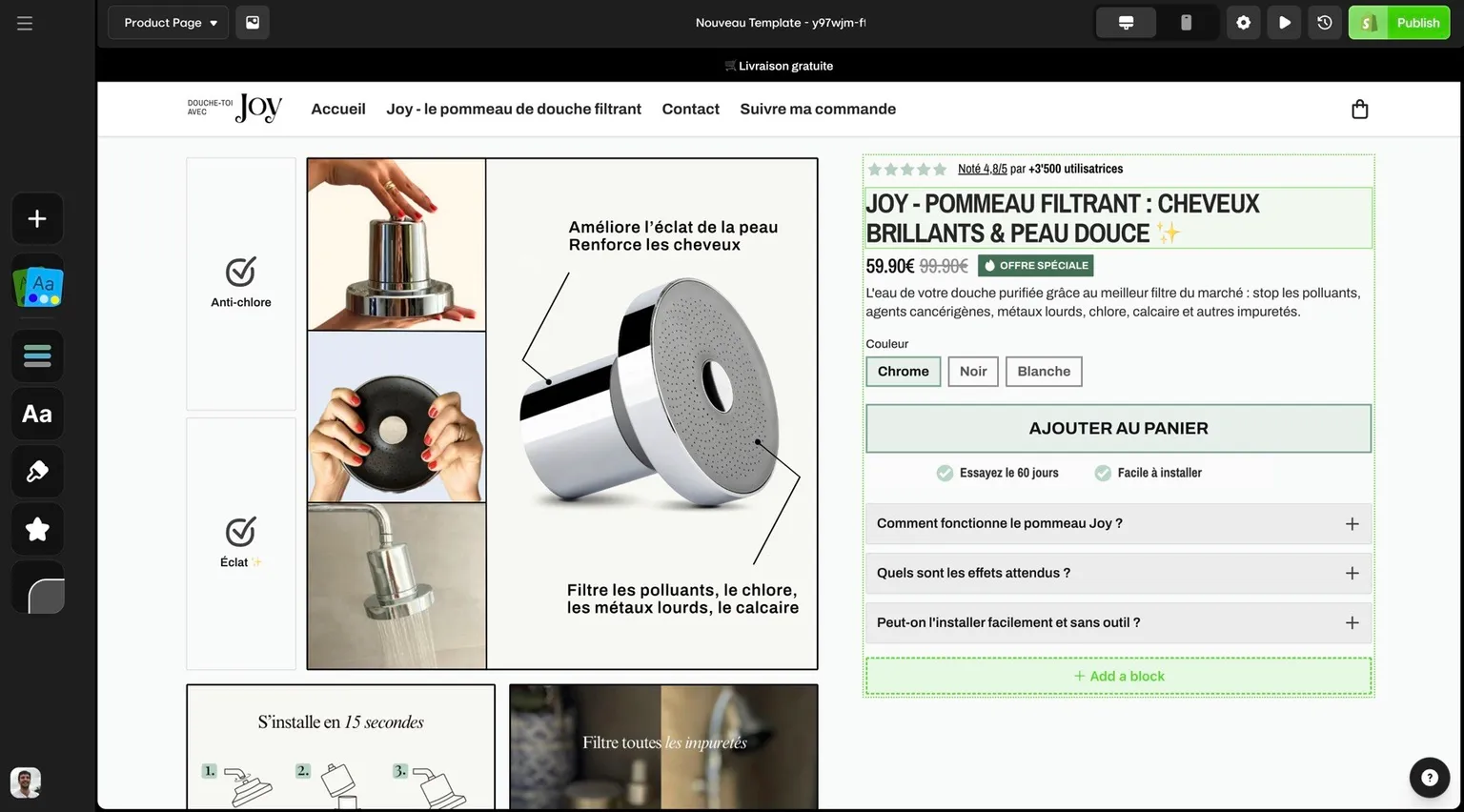
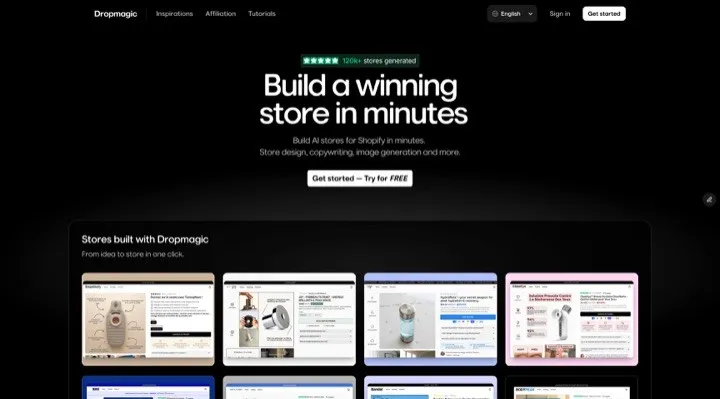
Utilise le créateur de boutique IA de Dropmagic pour monter ta boutique en quelques minutes — il génère automatiquement des pages produit professionnelles, une identité de marque et la mise en page de la boutique. C’est particulièrement précieux pour une boutique de produits numériques, où la présentation influence directement la valeur perçue. Consulte toutes les fonctionnalités du créateur de boutique Shopify IA expliquées pour le détail complet.
Les éléments clés d’une boutique de produits numériques :
-
Les aperçus produit — montre des mockups de ce que le client achète (un template en situation, un preset appliqué à une photo, un aperçu du programme d’une formation).
-
La livraison instantanée — utilise l’app Digital Downloads de Shopify ou un outil comme SendOwl pour envoyer les fichiers automatiquement après l’achat.
-
Des conditions de licence claires — précise si le client obtient une licence d’usage personnel ou commercial.
-
Aucune configuration de livraison — désactive complètement la livraison pour les produits numériques dans les réglages Shopify.
Étape 4 : fixe le prix de tes produits numériques
Le pricing des produits numériques suit d’autres règles que celui des produits physiques. Les produits numériques ont tendance à générer un AOV plus élevé que les biens physiques de la tranche 10–50 $ :
Les templates et presets se vendent généralement 5 $–30 $ pièce, ou 20 $–80 $ en bundle.
Les formations et contenus pédagogiques vont de 29 $ pour une mini-formation à 200 $+ pour un programme complet.
Les outils logiciels peuvent se vendre 10 $–50 $/mois en abonnement, ce qui en fait la catégorie la plus rentable sur le long terme.
Comme ton coût par vente est quasi nul, même des produits à 5 $–10 $ peuvent être très rentables en volume. Beaucoup de boutiques de dropshipping digital réussissent en pratiquant des prix accessibles et en visant le volume plutôt que le panier élevé.
Étape 5 : fais connaître tes produits numériques
Les meilleurs canaux marketing pour les produits numériques ne sont pas ceux du dropshipping physique :
Pinterest est le premier canal organique pour les produits numériques comme les templates, les imprimables et les ressources graphiques. Ses utilisateurs cherchent activement des ressources créatives, ce qui en fait une source de trafic à forte intention. Pinterest indique que la majorité de ses utilisateurs hebdomadaires ont déjà acheté à la suite d’un Pin vu chez une marque.
Le SEO et le contenu de blog fonctionnent exceptionnellement bien. Écris des articles comme « Les meilleurs templates Canva pour Instagram » ou « Presets Lightroom gratuits pour débutants » pour capter le trafic de recherche de gens qui cherchent déjà ton type de produit.
TikTok et les Reels Instagram sont efficaces pour montrer les produits numériques en action. Une vidéo de 30 secondes montrant l’avant/après d’un preset Lightroom peut générer un engagement énorme.
L’e-mail marketing est déterminant pour les produits numériques. Constitue une liste e-mail en offrant un échantillon gratuit, puis vends tes produits payants à tes abonnés. Les acheteurs de produits numériques ont tendance à racheter plusieurs fois auprès des marques en qui ils ont confiance.
Combiner dropshipping digital et physique
Beaucoup de boutiques de dropshipping qui marchent combinent les deux modèles. Une boutique fitness, par exemple, peut vendre des produits physiques (élastiques de résistance, tapis de yoga) en dropshipping traditionnel tout en vendant des produits numériques (programmes d’entraînement, templates de meal prep, tableurs de suivi sportif).
Cette approche diversifie tes revenus, augmente l’AOV et réduit ta dépendance à un seul fournisseur. Un client qui achète un produit physique et un téléchargement numérique dans la même commande vaut nettement plus qu’un client qui n’en achète qu’un.
Pour apprendre à vendre des produits physiques en dropshipping en parallèle du numérique, consulte notre guide pour se lancer gratuitement dans le dropshipping. Pour mettre en place la partie produits physiques, notre tutoriel DSers couvre tout le processus.
Dropshipping digital vs autres modèles e-commerce
Si tu évalues comment te lancer dans le dropshipping, il est utile de voir où le dropshipping digital se situe dans le paysage global :
| Modèle | Coût de démarrage | Marges | Traitement des commandes | Scalabilité |
|---|---|---|---|---|
| Dropshipping digital | 0–50 $ | 80–95 % | Livraison instantanée automatisée | Illimitée |
| Dropshipping physique | 0–100 $ | 15–40 % | Le fournisseur expédie au client | Limitée par le fournisseur |
| Print on demand | 0–50 $ | 20–50 % | Imprimé et expédié à la commande | Limitée par le prestataire |
| Marque propre | 2 000–10 000 $ | 40–70 % | Stocké, expédié par toi | Limitée par le stock |
| Hybride (numérique + physique) | 0–100 $ | 30–95 % | Mix automatisé + expédié | Très scalable |
L’approche hybride — combiner dropshipping digital et physique — gagne du terrain chez les boutiques de dropshipping expérimentées, parce qu’elle maximise à la fois les sources de trafic et les marges.
FAQ
Le dropshipping digital, c’est quoi exactement ?
Le dropshipping digital est un modèle économique où tu vends des produits numériques (templates, presets, formations, imprimables, logiciels) depuis ta propre boutique en ligne sans créer tous les produits toi-même. Soit tu achètes une licence auprès de créateurs, soit tu utilises du contenu PLR, soit tu t’associes à des créateurs contre un partage des revenus. Les produits sont livrés instantanément par téléchargement, sans livraison ni stock. Les marges se situent entre 80 et 95 % parce qu’il n’y a aucun coût unitaire après le sourcing initial.
Le dropshipping digital est-il légal ?
Oui, le dropshipping digital est parfaitement légal tant que tu détiens les droits nécessaires pour vendre les produits. Ça veut dire soit créer toi-même des produits originaux, soit acheter des licences de revente/PLR, soit avoir un accord écrit avec le créateur. Vendre du contenu numérique piraté ou sans licence est illégal et peut entraîner des retraits DMCA et des poursuites.
Comment me lancer en dropshipping avec des produits numériques ?
Pour te lancer en dropshipping digital : (1) Choisis une niche à la demande prouvée en t’appuyant sur Etsy, Google Trends et Gumroad. (2) Source tes produits via des licences PLR, Creative Market ou des partenariats avec des créateurs. (3) Monte ta boutique Shopify avec le créateur de boutique IA de Dropmagic pour un design professionnel en quelques minutes. (4) Installe l’app Digital Downloads de Shopify pour la livraison instantanée. (5) Fais ton marketing sur Pinterest, en contenu SEO et avec des démonstrations TikTok. Pour la configuration complète physique + numérique, consulte notre guide complet du dropshipping.
Combien puis-je gagner avec le dropshipping digital ?
Les revenus varient énormément, mais les produits numériques ont deux gros avantages : un coût par vente quasi nul et une scalabilité illimitée. D’après les données Shopify, un vendeur de produits numériques sur Shopify gagne en moyenne 1 000 $–10 000 $/mois dès sa première année. Les meilleurs vendeurs sur des niches comme les templates Canva ou les presets Lightroom peuvent dépasser 50 000 $ par an. Un seul produit qui ne coûte rien à livrer peut générer du chiffre indéfiniment.
Quelle est la meilleure plateforme pour vendre des produits numériques ?
Shopify avec l’app Digital Downloads est la plateforme e-commerce la plus flexible pour le dropshipping — surtout si tu veux vendre du numérique et du physique depuis la même boutique. Les alternatives : Gumroad (le plus simple à mettre en place, frais plus élevés), Payhip (bien pour les créateurs) et Etsy (trafic de marketplace intégré mais concurrence plus forte). Pour une comparaison complète, consulte notre guide des meilleures plateformes e-commerce pour le dropshipping.
Puis-je combiner dropshipping digital et physique dans une seule boutique ?
Absolument, et c’est même une stratégie recommandée pour maximiser tes revenus. Les produits physiques apportent un trafic régulier pendant que les produits numériques ajoutent un revenu à forte marge, sans coût de traitement des commandes. Utilise la même boutique Shopify pour les deux — configure les produits numériques avec l’app Digital Downloads et les produits physiques avec une app fournisseur comme DSers. Beaucoup de boutiques de dropshipping qui réussissent utilisent cette approche hybride.
Tu cherches une solution propulsée par l’IA pour créer ta boutique de dropshipping ? Consulte notre guide complet des créateurs de boutique de dropshipping IA en 2026.